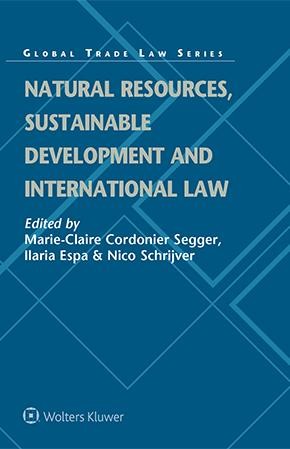
Natural Resources, Sustainable Development and International Law is a volume, penned by distinguished expert authors from diverse jurisdictions, offering a structured and thoughtful articulation of international law for the sustainable development of natural resources, which, after decades of fragmented and conflicting attempts to address widespread degradation and depletion, are at last increasingly recognized as matters of common global, regional, transboundary and national concern. Engaging with the 2020 Guidelines of the International Law Association on the Role of International Law in Sustainable Natural Resources Management for Development, the volume provides legal case studies and analyses across a spectrum of natural resources management. By exploring how existing principles and rules of international law may be interpreted, applied, and further developed, the editors and authors – leading authorities in the field – highlight complex challenges and innovations in sustainable natural resource governance.
The chapters draw on treaty law, customary international law, adjudication, and evolving soft law instruments to build a nuanced and multifaceted legal analysis incorporating rules, regimes and practices, including:
With full attention to the delicate balance between sovereignty and international stewardship and the competing demands of economic development and ecological limits, this work can help to ensure that natural resources are governed more sustainably, and that tensions can be resolved through legal innovation, principled adjudication, and multilateral cooperation. Its critical reflections and forward-looking insights identify the strengths and limits of existing regimes and propose pathways for reform.
The volume presents an extraordinary synthesis of legal insight and policy relevance, grounded in more than eight years of collaborative research by expert members of the International Law Association. It provides a principled and practical framework for judges, practitioners, policymakers, researchers, negotiators and all those engaged in natural resources governance and the pursuit of sustainable development. The volume affirms international law’s enduring relevance – and indeed its responsibility – to manage natural resources prudently, equitably, and sustainably in the interest of present and future generations.