The eBooks we sell are sold as a single-user licence and are intended for the end user only.
The sale of some eBooks are restricted to certain countries. To alert you to such restrictions, please select the country of the billing address of your credit or debit card you wish to use for payment.
For further information see https://www.wildy.com/ebook-formats
Once the order is confirmed an e-mail will be sent to you to allow you to download the eBook. For UK purchases this will be automatic. For purchases outside the UK a member of staff will need to confirm the sale. (Staff are available to do this during normal business hours, Mon-Fri 8:30-17:00 UK time)
All eBooks are supplied firm sale and cannot be returned. If you believe there is a fault with your eBook then contact us on ebooks@wildy.com and we will help in resolving the issue. This does not affect your statutory rights.
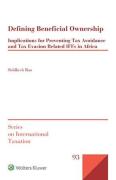
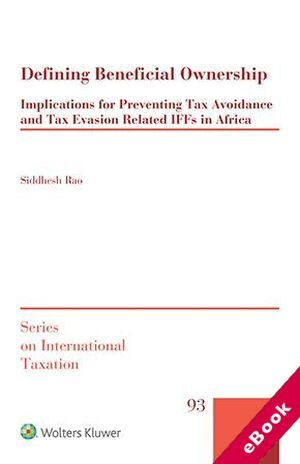
Defining Beneficial Ownership is a pioneering book providing the first comprehensive comparative legal study of beneficial ownership (BO) definitions and implementation in Africa, anchored in international frameworks such as Financial Action Tax Force Recommendations, the UN Convention against Corruption, the OECD’s Global Forum standards, the EU Anti-Money Laundering Directives, and the Extractive Industries Transparency Initiative.
The fight against illicit financial flows (IFFs) in Africa hinges on a simple question: Who ultimately owns and controls companies and assets? Across tax, anti-money laundering (AML), and corporate governance regimes, the concept of BO is central to identifying the natural persons behind legal structures. Yet, definitions, thresholds, and disclosure obligations vary widely between jurisdictions, creating exploitable gaps.
What’s in this book:
Using a descriptive-analytic method, the author examines the content, scope, and operationalization of BO requirements across:
The analysis draws on detailed country case studies of Kenya, Nigeria, and South Africa, revealing both legal innovations and persistent enforcement challenges. The book also proposes a model BO definition.
How this will help you:
With its deep integration of comparative law, policy analysis, and practical reform measures, this book has no peers. It will be indispensable to: