
The eBooks we sell are sold as a single-user licence and are intended for the end user only.
The sale of some eBooks are restricted to certain countries. To alert you to such restrictions, please select the country of the billing address of your credit or debit card you wish to use for payment.
For further information see https://www.wildy.com/ebook-formats
Once the order is confirmed an e-mail will be sent to you to allow you to download the eBook. For UK purchases this will be automatic. For purchases outside the UK a member of staff will need to confirm the sale. (Staff are available to do this during normal business hours, Mon-Fri 8:30-17:00 UK time)
All eBooks are supplied firm sale and cannot be returned. If you believe there is a fault with your eBook then contact us on ebooks@wildy.com and we will help in resolving the issue. This does not affect your statutory rights.
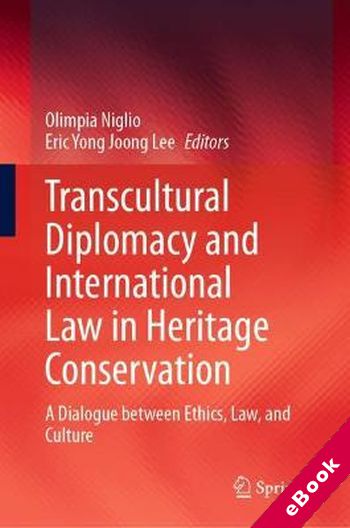
This book provides a substantial contribution to understanding the international legal framework for the protection and conservation of cultural heritage. It offers a range of perspectives from well-regarded contributors from different parts of the world on the impact of law in heritage conservation. Through a holistic approach, the authors bring the reader into dialogue around the intersection between the humanities and legal sciences, demonstrating the reciprocity of interaction in programs and projects to enhance cultural heritage in the world. This edited volume compiles a selection of interesting reflections on the role of cultural diplomacy to address intolerances that often govern international relations, causing damage to human and cultural heritage. The main purpose of this collection of essays is to analyse the different cultural paradigms that intervene in the management of heritage, and to advocate for improvements in international laws and conventions to enable better cultural policies of individual nations for the protection of human rights. The editors submit that it is only through open dialogue between the humanities and jurisprudence that the international community will be able to better protect and value sovereignty, and promote cultural heritage for the development of a better world. This collection is relevant to scholars working in areas relating to law, management and policies of cultural heritage conservation and protection.











