The eBooks we sell are sold as a single-user licence and are intended for the end user only.
The sale of some eBooks are restricted to certain countries. To alert you to such restrictions, please select the country of the billing address of your credit or debit card you wish to use for payment.
For further information see https://www.wildy.com/ebook-formats
Once the order is confirmed an e-mail will be sent to you to allow you to download the eBook. For UK purchases this will be automatic. For purchases outside the UK a member of staff will need to confirm the sale. (Staff are available to do this during normal business hours, Mon-Fri 8:30-17:00 UK time)
All eBooks are supplied firm sale and cannot be returned. If you believe there is a fault with your eBook then contact us on ebooks@wildy.com and we will help in resolving the issue. This does not affect your statutory rights.
Due to a technical issue some ebooks are not available to order.
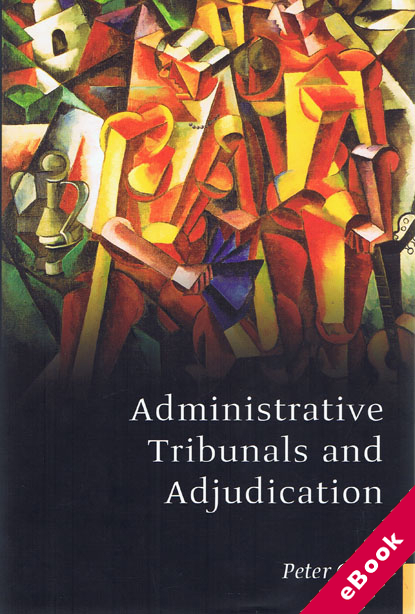
Among the many constitutional developments of the past century or so, one of the most significant has been the creation and proliferation of institutions that perform functions similar to those performed by courts but which are considered to be, and in some ways are, different and distinct from courts as traditionally conceived. In much of the common law world, such institutions are called 'administrative tribunals'. Their main function is to adjudicate disputes between citizens and the state by reviewing decisions of government agencies - a function also performed by courts in 'judicial review' proceedings and appeals. Although tribunals in aggregate adjudicate many more such disputes than courts, tribunals and their role as dispensers of 'administrative justice' receive relatively little scholarly attention.
This wide-ranging book-length treatment of the subject compares tribunals in three major jurisdictions: Australia the UK and the US. It analyses and offers an account of the concept of 'administrative adjudication', and traces its historical development from the earliest periods of the common law to the twenty-first century. There are chapters dealing with the design of tribunals and tribunal systems and with what tribunals do, what they are for and how they interact with their users. The book ends with a discussion of the place of tribunals in the 'administrative justice system' and speculation about possible future developments.
Administrative Tribunals and Adjudication fills a significant gap in the literature and will be of great value to public lawyers and others interested in government accountability.