The eBooks we sell are sold as a single-user licence and are intended for the end user only.
The sale of some eBooks are restricted to certain countries. To alert you to such restrictions, please select the country of the billing address of your credit or debit card you wish to use for payment.
For further information see https://www.wildy.com/ebook-formats
Once the order is confirmed an e-mail will be sent to you to allow you to download the eBook. For UK purchases this will be automatic. For purchases outside the UK a member of staff will need to confirm the sale. (Staff are available to do this during normal business hours, Mon-Fri 8:30-17:00 UK time)
All eBooks are supplied firm sale and cannot be returned. If you believe there is a fault with your eBook then contact us on ebooks@wildy.com and we will help in resolving the issue. This does not affect your statutory rights.
Due to a technical issue some ebooks are not available to order.
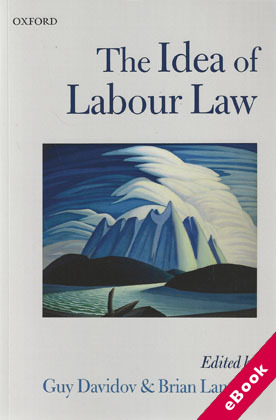
Labour law is widely considered to be in crisis by scholars of the field. This crisis has an obvious external dimension - labour law is attacked for impeding efficiency, flexibility, and development; vilified for reducing employment and for favouring already well placed employees over less fortunate ones; and discredited for failing to cover the most vulnerable workers and workers in the "informal sector".
These are just some of the external challenges to labour law. There is also an internal challenge, as labour lawyers themselves increasingly question whether their discipline is conceptually coherent, relevant to the new empirical realities of the world of work, and normatively salient in the world as we now know it.
This book responds to such fundamental challenges by asking the most fundamental questions: What is labour law for? How can it be justified? And what are the normative premises on which reforms should be based? There has been growing interest in such questions in recent years.
In this volume the contributors seek to take this body of scholarship seriously and also to move it forward. Its aim is to provide, if not answers which satisfy everyone, intellectually nourishing food for thought for those interested in understanding, explaining and interpreting labour laws - whether they are scholars, practitioners, judges, policy-makers, or workers and employers.