The eBooks we sell are sold as a single-user licence and are intended for the end user only.
The sale of some eBooks are restricted to certain countries. To alert you to such restrictions, please select the country of the billing address of your credit or debit card you wish to use for payment.
For further information see https://www.wildy.com/ebook-formats
Once the order is confirmed an e-mail will be sent to you to allow you to download the eBook. For UK purchases this will be automatic. For purchases outside the UK a member of staff will need to confirm the sale. (Staff are available to do this during normal business hours, Mon-Fri 8:30-17:00 UK time)
All eBooks are supplied firm sale and cannot be returned. If you believe there is a fault with your eBook then contact us on ebooks@wildy.com and we will help in resolving the issue. This does not affect your statutory rights.
Due to a technical issue some ebooks are not available to order.
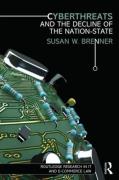
This book explores the extraordinary difficulties a nation-state's law enforcement and military face in attempting to prevent cyber-attacks. In the wake of recent assaults including the denial of service attack on Estonia in 2007 and the widespread use of the Zeus Trojan Horse software, Susan W. Brenner explores how traditional categories and procedures inherent in law enforcement and military agencies can obstruct efforts to respond to cyberthreats. Brenner argues that the use of a territorially-based system of sovereignty to combat cyberthreats is ineffective, as cyberspace erodes the import of territory. This problem is compounded by the nature of cybercrime as a continually evolving phenomenon driven by rapid and complex technological change. Following an evaluation of the efficacy of the nation-state, the book goes on to explore how individuals and corporations could be integrated into a more decentralized, distributed system of cyberthreat control. Looking at initiatives in Estonia and Sweden which have attempted to incorporate civilians into their cyber-response efforts, Brenner suggests that civilian involvement may mediate the rigid hierarchies that exist among formal agencies and increase the flexibility of any response. This book will be of great interest to students and researchers of information technological law and security studies.


Due to a technical issue some ebooks are not available to order.


Due to a technical issue some ebooks are not available to order.







Due to a technical issue some ebooks are not available to order.

Due to a technical issue some ebooks are not available to order.