The eBooks we sell are sold as a single-user licence and are intended for the end user only.
The sale of some eBooks are restricted to certain countries. To alert you to such restrictions, please select the country of the billing address of your credit or debit card you wish to use for payment.
For further information see https://www.wildy.com/ebook-formats
Once the order is confirmed an e-mail will be sent to you to allow you to download the eBook. For UK purchases this will be automatic. For purchases outside the UK a member of staff will need to confirm the sale. (Staff are available to do this during normal business hours, Mon-Fri 8:30-17:00 UK time)
All eBooks are supplied firm sale and cannot be returned. If you believe there is a fault with your eBook then contact us on ebooks@wildy.com and we will help in resolving the issue. This does not affect your statutory rights.
Due to a technical issue some ebooks are not available to order.
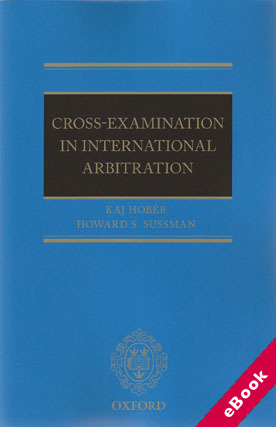
Opportunities to see expert cross-examinations are often infrequent in international arbitration and the occasions to sharpen these skills for many are rare. This book is both an invaluable teaching tool as well as a general guide to effective cross-examination in international arbitration. Based on extensive experience and insight from the authors and aided by practical examples, it provides a thoroughly illustrated analysis of how essential cross-examination techniques can best be adapted to the arbitral format.
Concise and well organised, it leads the reader through the different cross-examination techniques in an accessible 'do's and don'ts' structure, presenting readers with a clear and authoritative introduction to the 'art' of cross-examination or a quick-reference for more experienced practitioners. An international arbitration hearing is very different from a trial in a court and any practitioner appearing as counsel, whether common or civil law lawyers, need to know what will happen and how it will differ in order to adapt their conduct. Hober and Sussman explore the challenges practitioners face when conducting a cross-examination in such an environment and provide practical learning aids to help overcome them.
Cross Examination In International Arbitration addresses the common issues that can occur in cross-examination in arbitrations such as adjusting the level of English to consider the competency of the panel's least competent member or how to cross-examine a witness with only the use of a written statement rather than by means of oral direct testimony. By highlighting the common challenges which might arise, the authors present a guide which will benefit those practicing or looking to practice in this field.