The eBooks we sell are sold as a single-user licence and are intended for the end user only.
The sale of some eBooks are restricted to certain countries. To alert you to such restrictions, please select the country of the billing address of your credit or debit card you wish to use for payment.
For further information see https://www.wildy.com/ebook-formats
Once the order is confirmed an e-mail will be sent to you to allow you to download the eBook. For UK purchases this will be automatic. For purchases outside the UK a member of staff will need to confirm the sale. (Staff are available to do this during normal business hours, Mon-Fri 8:30-17:00 UK time)
All eBooks are supplied firm sale and cannot be returned. If you believe there is a fault with your eBook then contact us on ebooks@wildy.com and we will help in resolving the issue. This does not affect your statutory rights.
Due to a technical issue some ebooks are not available to order.
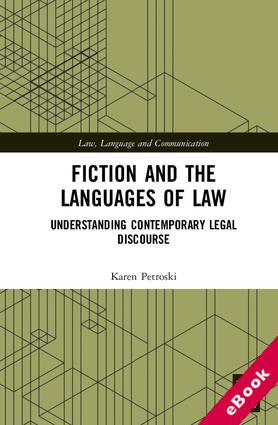
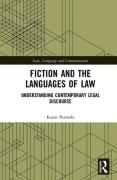
Contemporary legal reasoning has more in common with fictional discourse than we tend to realize. Through an examination of the U.S. Supreme Court’s written output during a recent landmark term, this book exposes many of the parallels between these two special kinds of language use. Focusing on linguistic and rhetorical patterns in the dozens of reasoned opinions issued by the Court between October 2014 and June 2015, the book takes nonlawyer readers on a lively tour of contemporary American legal reasoning and acquaints legal readers with some surprising features of their own thinking and writing habits. It analyzes cases addressing a huge variety of issues, ranging from the rights of drivers stopped by the police to the decision-making processes of the Environmental Protection Agency—as well as the term’s best-known case, which recognized a constitutional right to marriage for same-sex as well as different-sex couples. Fiction and the Languages of Law reframes a number of long-running legal debates, identifies other related paradoxes within legal discourse, and traces them all to common sources: judges’ and lawyers’ habit of alternating unselfconsciously between two different attitudes toward the language they use, and a set of professional biases that tends to prevent scrutiny of that habit.
Due to a technical issue some ebooks are not available to order.
Due to a technical issue some ebooks are not available to order.

Due to a technical issue some ebooks are not available to order.
Due to a technical issue some ebooks are not available to order.

Due to a technical issue some ebooks are not available to order.