
The eBooks we sell are sold as a single-user licence and are intended for the end user only.
The sale of some eBooks are restricted to certain countries. To alert you to such restrictions, please select the country of the billing address of your credit or debit card you wish to use for payment.
For further information see https://www.wildy.com/ebook-formats
Once the order is confirmed an e-mail will be sent to you to allow you to download the eBook. For UK purchases this will be automatic. For purchases outside the UK a member of staff will need to confirm the sale. (Staff are available to do this during normal business hours, Mon-Fri 8:30-17:00 UK time)
All eBooks are supplied firm sale and cannot be returned. If you believe there is a fault with your eBook then contact us on ebooks@wildy.com and we will help in resolving the issue. This does not affect your statutory rights.
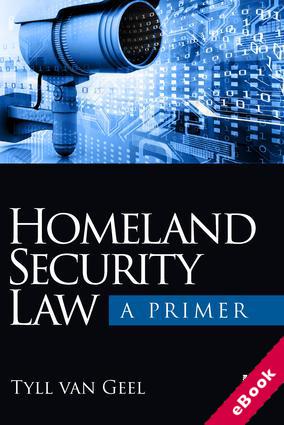
Since 2001 the U.S. government has been engaged in the delicate balancing act of seeking to protect the country against terrorism, both foreign-connected and wholly domestic, while taking into account a number of constitutional protections that can all too easily be trammelled in the effort to assure domestic security. At the same time the development of these policies has created significant constitutional tension among the three branches of the federal government, especially when the President vigorously asserts claims of sweeping power as commander-in-chief in such a way as to raise warnings about the emergence of an imperial presidency. Simultaneously, the rule of law has been placed under stress as the technological prowess of the government has grown.
This book addresses these topics in an accessible manner, covering the key developments of domestic security law related to terrorism. Tyll van Geel covers the essential elements of homeland security law including: branches of government and institutions involved in counterterrorism law; border control and immigration; surveillance; the searching of computers and cell phones; the prosecution of terrorists for any number of crimes, including cyberterrorism; military detention; the prosecution of unprivileged enemy belligerents in military commissions; and habeas corpus. The book is designed to offer a clear guide to current issues in domestic security in response to terrorism and will be a valuable guide for concerned citizens as well as undergraduate students studying domestic politics or national security.











