
The eBooks we sell are sold as a single-user licence and are intended for the end user only.
The sale of some eBooks are restricted to certain countries. To alert you to such restrictions, please select the country of the billing address of your credit or debit card you wish to use for payment.
For further information see https://www.wildy.com/ebook-formats
Once the order is confirmed an e-mail will be sent to you to allow you to download the eBook. For UK purchases this will be automatic. For purchases outside the UK a member of staff will need to confirm the sale. (Staff are available to do this during normal business hours, Mon-Fri 8:30-17:00 UK time)
All eBooks are supplied firm sale and cannot be returned. If you believe there is a fault with your eBook then contact us on ebooks@wildy.com and we will help in resolving the issue. This does not affect your statutory rights.
Due to a technical issue some ebooks are not available to order.
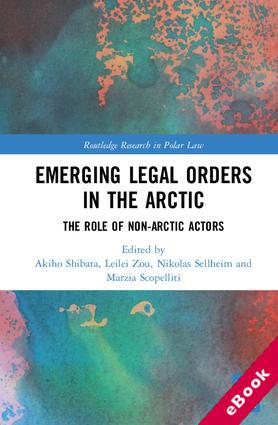
More than ever before the changing environmental and political landscape in the Arctic requires stability and foreseeability based on resilient common norms. The emerging legal orders in the Arctic cannot be legitimately created or effectively implemented unless all relevant actors are involved. Simultaneously, it must always be based on respect for the sovereign rights of the eight Arctic states in the region, as well as the tradition and cultural livelihood of the local communities. It is this delicate balance between Arctic and non-Arctic interests that is the core problématique for the emerging legal orders in the Arctic.
Emerging Legal Orders in the Arctic critically examines the role of non-Arctic actors in this advancement of the shape and scope of the Arctic legal order. Discussing the admittance and participation of Observer states and organisations in the Arctic Council, including task force meetings where new treaties are negotiated, it details the issues and successes this can result in. Setting up the context of the current legal orders in the Arctic, the book discusses Asian, indigenous and European perspectives, amongst others. There is a strong focus on the groundbreaking fisheries agreement of November 2017 in the Central Arctic Ocean (CAO), and the impact on both Arctic and non-Arctic actors. Interests in marine living resources, scientific cooperation and the Arctic shipping regimes and governance are also thoroughly discussed from multiple perspectives.
The book combines the expertise of academics and practitioners in the fields of international law and Arctic governance, uniquely focusing on Asian actors in the Arctic legal order-making. The resulting study is a fascinating insight into the interplay between non-Arctic actors and the Arctic legal order, and will be invaluable to academics in the field of Arctic and international law.










