The eBooks we sell are sold as a single-user licence and are intended for the end user only.
The sale of some eBooks are restricted to certain countries. To alert you to such restrictions, please select the country of the billing address of your credit or debit card you wish to use for payment.
For further information see https://www.wildy.com/ebook-formats
Once the order is confirmed an e-mail will be sent to you to allow you to download the eBook. For UK purchases this will be automatic. For purchases outside the UK a member of staff will need to confirm the sale. (Staff are available to do this during normal business hours, Mon-Fri 8:30-17:00 UK time)
All eBooks are supplied firm sale and cannot be returned. If you believe there is a fault with your eBook then contact us on ebooks@wildy.com and we will help in resolving the issue. This does not affect your statutory rights.
Due to a technical issue some ebooks are not available to order.
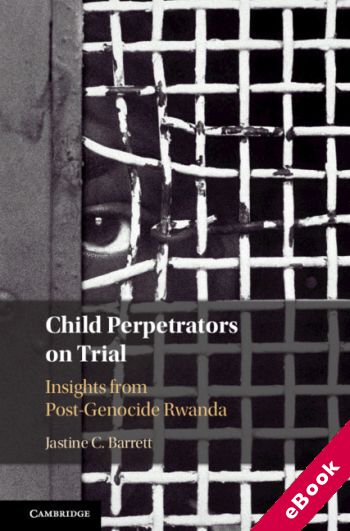
Following a devastating genocide in 1994, the Rwandan government elected to hold all perpetrators accountable – including children. Thousands of children were held in prisons while awaiting charges; some were later convicted. This book is about these children. Drawing on interviews and extensive archival research in Rwanda, it documents their journey through prisons, formal courts, gacaca proceedings or re-education centres. Its insights extend beyond Rwanda, looking at how international law protects children accused of even the most serious atrocities. The book is about law in action, and how states, and international organisations, operationalise international standards on child perpetrators in challenging post-conflict conditions. Engaging with theories from international law, international relations and anthropology, it illuminates strategies utilised by UNICEF to promote the rights of alleged child génocidaires and traces UNICEF's positive influence on their protection. It makes the case for principled pragmatism as an approach to human rights promotion in post-conflict societies.