
The eBooks we sell are sold as a single-user licence and are intended for the end user only.
The sale of some eBooks are restricted to certain countries. To alert you to such restrictions, please select the country of the billing address of your credit or debit card you wish to use for payment.
For further information see https://www.wildy.com/ebook-formats
Once the order is confirmed an e-mail will be sent to you to allow you to download the eBook. For UK purchases this will be automatic. For purchases outside the UK a member of staff will need to confirm the sale. (Staff are available to do this during normal business hours, Mon-Fri 8:30-17:00 UK time)
All eBooks are supplied firm sale and cannot be returned. If you believe there is a fault with your eBook then contact us on ebooks@wildy.com and we will help in resolving the issue. This does not affect your statutory rights.
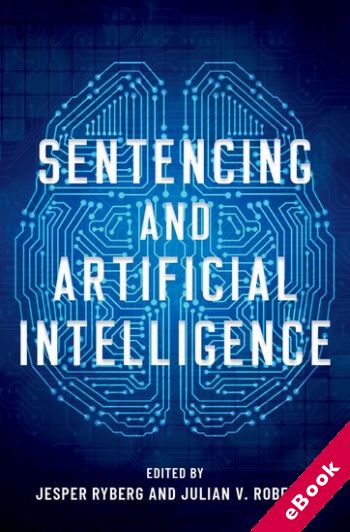
The first collective work devoted exclusively to the ethical and penal theoretical considerations of the use of artificial intelligence at sentencing.
Is it morally acceptable to use artificial intelligence (AI) in the determination of sentences on those who have broken the law? If so, how should such algorithms be used—and what are the consequences?
Jesper Ryberg and Julian V. Roberts bring together leading experts to answer these questions. Sentencing and Artificial Intelligence investigates to what extent, and under which conditions, justice and the social good may be promoted by allocating parts of the most important task of the criminal court—that of determining legal punishment—to computerized sentencing algorithms. The introduction of an AI-based sentencing system could save significant resources and increase consistency across jurisdictions. But it could also reproduce historical biases, decrease transparency in decision-making, and undermine trust in the justice system. Dealing with a wide-range of pertinent issues including the transparency of algorithmic-based decision-making, the fairness and morality of algorithmic sentencing decisions, and potential discrimination as a result of these practices, this volume offers avaluable insight on the future of sentencing.










