The eBooks we sell are sold as a single-user licence and are intended for the end user only.
The sale of some eBooks are restricted to certain countries. To alert you to such restrictions, please select the country of the billing address of your credit or debit card you wish to use for payment.
For further information see https://www.wildy.com/ebook-formats
Once the order is confirmed an e-mail will be sent to you to allow you to download the eBook. For UK purchases this will be automatic. For purchases outside the UK a member of staff will need to confirm the sale. (Staff are available to do this during normal business hours, Mon-Fri 8:30-17:00 UK time)
All eBooks are supplied firm sale and cannot be returned. If you believe there is a fault with your eBook then contact us on ebooks@wildy.com and we will help in resolving the issue. This does not affect your statutory rights.
Due to a technical issue some ebooks are not available to order.
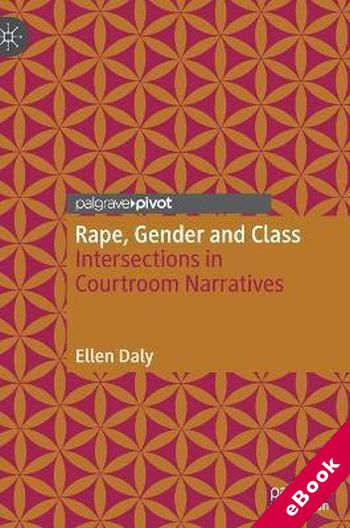
This book provides a timely analysis of the use of cultural narratives and narratives of credibility in rape trials in England and Wales, drawing on court observation methods. It draws on data from rape and sexual assault trials in 2019 which is used to examine the current status of newly emerging issues such as the use of digital evidence and the impacts of increasing policy attention on rape trials. Drawing on the concept of master narratives, the book provides an examination of rape myths and broader cultural narratives focussing on the intersections of gender and class and it also touches on the intersections of age, (dis)ability and mental health. It emphasizes the importance of situating rape myth debates and sexual violence research within a broader cultural context and thus argues for widening the lens with which rape myths in the courtroom, as well as in the wider criminal justice system, are viewed in research and contemporary debates. The findings presented in this book will help further discussion at a critical time by enabling scholars, as well as practitioners and policymakers, to better understand the current mechanisms that serve to undermine and retraumatise victim-survivors in the courtroom. It seeks to inform further research as well as positive changes to policy and practice.