The eBooks we sell are sold as a single-user licence and are intended for the end user only.
The sale of some eBooks are restricted to certain countries. To alert you to such restrictions, please select the country of the billing address of your credit or debit card you wish to use for payment.
For further information see https://www.wildy.com/ebook-formats
Once the order is confirmed an e-mail will be sent to you to allow you to download the eBook. For UK purchases this will be automatic. For purchases outside the UK a member of staff will need to confirm the sale. (Staff are available to do this during normal business hours, Mon-Fri 8:30-17:00 UK time)
All eBooks are supplied firm sale and cannot be returned. If you believe there is a fault with your eBook then contact us on ebooks@wildy.com and we will help in resolving the issue. This does not affect your statutory rights.
Due to a technical issue some ebooks are not available to order.
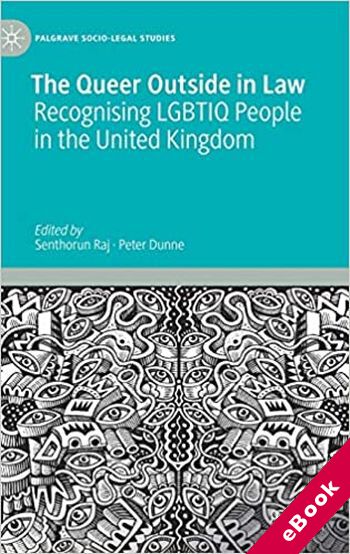
This book contributes to current debates about “queer outsides” and “queer outsiders” that emerge from tensions in legal reforms aimed at improving the lives of lesbian, gay, bisexual, transgender, intersex, and queer people in the United Kingdom. LGBTIQ people in the UK have moved from being situated as “outlaws” – through prohibitions on homosexuality or cross-dressing – to respectable “in laws” – through the emerging acceptance of same-sex families and self-identified genders. From the partial decriminalisation of homosexuality in the Sexual Offences Act 1967, to the provision of a bureaucratic mechanism to amend legal sex in the Gender Recognition Act 2004, bringing LGBTIQ people “inside” the law has prompted enormous activist and academic commentary on the desirability of inclusion-focused legal and social reforms.
Canvassing an array of current socio-legal debates on colonialism, refugee law, legal gender recognition, intersex autonomy and transgender equality, the contributing authors explore “queer outsiders” who remain beyond the law’s reach and outline the ways in which these outsiders might seek to “come within” and/or “stay outside” law. Given its scope, this modern work will appeal to legal scholars, lawyers, and activists with an interest in gender, sex, sexuality, race, migration and human rights law.