The eBooks we sell are sold as a single-user licence and are intended for the end user only.
The sale of some eBooks are restricted to certain countries. To alert you to such restrictions, please select the country of the billing address of your credit or debit card you wish to use for payment.
For further information see https://www.wildy.com/ebook-formats
Once the order is confirmed an e-mail will be sent to you to allow you to download the eBook. For UK purchases this will be automatic. For purchases outside the UK a member of staff will need to confirm the sale. (Staff are available to do this during normal business hours, Mon-Fri 8:30-17:00 UK time)
All eBooks are supplied firm sale and cannot be returned. If you believe there is a fault with your eBook then contact us on ebooks@wildy.com and we will help in resolving the issue. This does not affect your statutory rights.
Due to a technical issue some ebooks are not available to order.
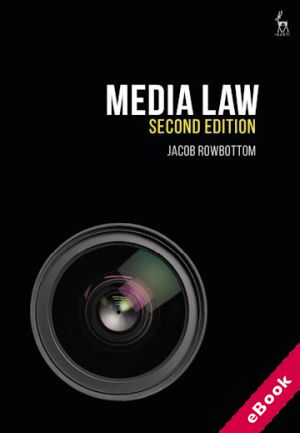
The second edition of this groundbreaking book looks at the key debates and issues in media law, a fast-developing area of scholarship that raises many high-profile and controversial questions.
Recent issues include the privacy rights of public figures, the use of legal tools to silence critics, the rights to access information held by public bodies, the political power of media owners, the future of public service broadcasting and the regulation of the digital media. The chapters examine the protection of personal rights to reputation and privacy, the administration of justice, the role of government censorship, the protection of the newsgathering process, the regulation of the media and the impact of digital communications.
The analysis is grounded in an account of media freedom that looks at the important democratic functions performed by the media and journalism. Examining various key themes, the book shows how those functions continue to evolve in a changing political culture and also how the media are subject to a range of legal and informal constraints. The book asks whether the law strikes the right balance in protecting media freedom while preventing the abuse of media power, and considers the future of media law in the digital era.
Authoritative and accessible, the book is essential reading for students and scholars of media law alike.