The eBooks we sell are sold as a single-user licence and are intended for the end user only.
The sale of some eBooks are restricted to certain countries. To alert you to such restrictions, please select the country of the billing address of your credit or debit card you wish to use for payment.
For further information see https://www.wildy.com/ebook-formats
Once the order is confirmed an e-mail will be sent to you to allow you to download the eBook. For UK purchases this will be automatic. For purchases outside the UK a member of staff will need to confirm the sale. (Staff are available to do this during normal business hours, Mon-Fri 8:30-17:00 UK time)
All eBooks are supplied firm sale and cannot be returned. If you believe there is a fault with your eBook then contact us on ebooks@wildy.com and we will help in resolving the issue. This does not affect your statutory rights.
Due to a technical issue some ebooks are not available to order.
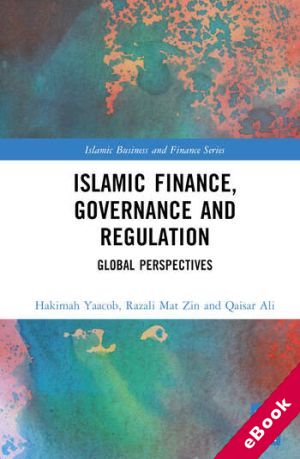
Islamic financial institutions (IFIs) are often criticized due to insufficient regulatory provision, thus lowering clients’ confidence in them. Additionally, few countries have well-established legislation relating to the Islamic finance industry, while others are only now developing preliminary regulations to incorporate Islamic finance within their own financial systems.
This book offers a comprehensive understanding of Islamic financial regulation, outlining the regulatory landscape in various jurisdictions, examining how it supports the development and foundation of IFIs and addressing the regulation and supervision of IFIs from a global perspective. The book begins by introducing Islamic finance and its current position in the international banking system, then goes on to review the historical developments of the field. It discusses the key financial regulators, their functions, and the regulations that have been implemented to foster the growth of Islamic finance. It includes cases from both Eastern and Western countries. It thoroughly examines how Shariah principles are integrated into the regulatory framework of Islamic finance. Specifically, the book examines the laws and arrangements established in different countries regarding the governance of the Islamic finance industry as well as the legal criteria for setting up and governing IFIs.
The focus is on exploring diverging laws and their impact on developing Islamic Finance. This will serve as an academic and practitioner guide to understanding the preliminary regulations required for the establishment, governance, and management of IFIs. Also, it offers practical insights and guidance for professionals working in the Islamic finance industry, including bankers, lawyers, regulators, and policymakers.