
The eBooks we sell are sold as a single-user licence and are intended for the end user only.
The sale of some eBooks are restricted to certain countries. To alert you to such restrictions, please select the country of the billing address of your credit or debit card you wish to use for payment.
For further information see https://www.wildy.com/ebook-formats
Once the order is confirmed an e-mail will be sent to you to allow you to download the eBook. For UK purchases this will be automatic. For purchases outside the UK a member of staff will need to confirm the sale. (Staff are available to do this during normal business hours, Mon-Fri 8:30-17:00 UK time)
All eBooks are supplied firm sale and cannot be returned. If you believe there is a fault with your eBook then contact us on ebooks@wildy.com and we will help in resolving the issue. This does not affect your statutory rights.
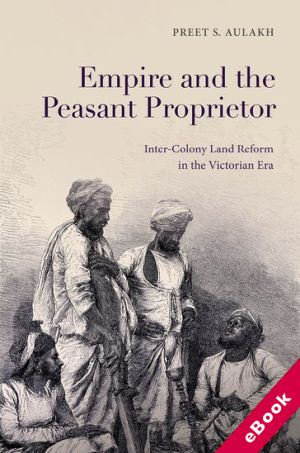
As the British Empire consolidated its geographical possession of distant lands by the 19th century, the agrarian nature of its colonies necessitated careful considerations about land tenure relationships. After intense debates around property rights and political economy, several land laws were enacted across the Empire between 1868 and 1875, which recognised the proprietary rights of peasant cultivators. Empire and the Peasant Proprietor examines this transformative shift in the imperial approaches to land tenure.
Through a comparative analysis of historical land tenure arrangements in three diverse colonial sites, Punjab, Ireland, and Prince Edward Island, the book identifies two crucial mechanisms which facilitated the institutionalisation of peasant proprietorship. One, there was a fortuitous ideological alignment between important governing agents in the three colonies. Two, the debate about the impact of land reform in the colonies on the 'sanctity' of English principles was redirected, allowing for inter-colony analogies and precedents to support the proprietary rights of peasant cultivators.
Empire and the Peasant Proprietor demonstrates the importance of these reciprocal influences within the imperial system and provides insight into contemporary challenges of secure land rights for a large proportion of the global population that continues to be dependent on agriculture for sustenance.










