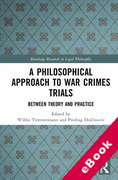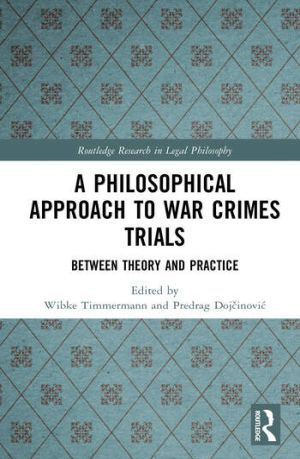
This volume examines the underexplored relationship between philosophy and international criminal law, disciplines commonly separated despite their shared engagement with truth, responsibility, and judgment.
Philosophical inquiry has long analyzed concepts central to criminal adjudication, yet these insights have rarely informed international criminal trial practice. Consequently, notions such as intent, causation, qualia, fairness, truth, dignity, luck, and amnesty are often employed in conceptually thin or imprecise ways. Treating these notions simultaneously as legal requirements, forms of deliberative reasoning, and subjects of contemporary philosophical debate, the book demonstrates how philosophy can clarify, discipline, and strengthen international legal reasoning. The discussions, written by philosophically and scientifically informed scholars and experienced international law practitioners, revisit foundational philosophical ideas, critically reassess their assumptions, and translate them into operational tools for international criminal jurisprudence. Through close engagement with doctrinal practice and trial reasoning, the contributors address persistent conceptual gaps and unresolved interpretive difficulties that have shaped past and ongoing proceedings.
The volume aims to expand the analytical resources available to judges, prosecutors, defense counsel, investigators, and scholars. It ultimately presents international criminal law as a form of applied philosophy, arguing that rigorous philosophical analysis can enhance the coherence, fairness, and practical effectiveness of international criminal law practice worldwide.