The eBooks we sell are sold as a single-user licence and are intended for the end user only.
The sale of some eBooks are restricted to certain countries. To alert you to such restrictions, please select the country of the billing address of your credit or debit card you wish to use for payment.
For further information see https://www.wildy.com/ebook-formats
Once the order is confirmed an e-mail will be sent to you to allow you to download the eBook. For UK purchases this will be automatic. For purchases outside the UK a member of staff will need to confirm the sale. (Staff are available to do this during normal business hours, Mon-Fri 8:30-17:00 UK time)
All eBooks are supplied firm sale and cannot be returned. If you believe there is a fault with your eBook then contact us on ebooks@wildy.com and we will help in resolving the issue. This does not affect your statutory rights.
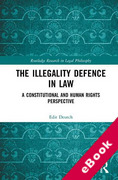
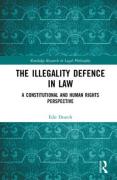
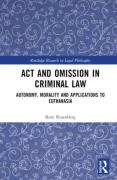
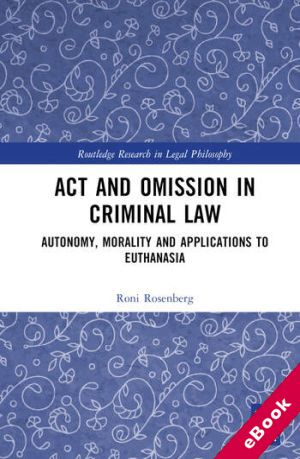
This book offers an innovative perspective on the critical distinction between acts and omissions in criminal law, a distinction that runs like a defining thread through all types of criminal offenses.
While any act that positively causes a prohibited harm is sufficient for a conviction, an omission that causes the very same harm warrants a conviction only when there is a legal duty to act. This fundamental distinction between acts and omissions is not just relevant to criminal law, but it is also deeply rooted in our moral thinking. Thus, it is commonly argued that the difference between acts and omissions is also applicable to the intuitive moral distinction between active euthanasia, forbidden in most countries, and passive euthanasia, permitted in many countries under certain circumstances. Hence, the significance of this book is threefold: First, it offers a comprehensive, coherent, and systematic discussion of the intersections between the philosophical-moral and the legal-criminal aspects of this fundamental topic. Second, it offers a novel rationale for the distinction between acts and omissions, based on the principle of autonomy. Finally, it demonstrates the influences of the theoretical discussion, on the most significant practical questions.
This book will be of interest to researchers, academics and policy-makers working in the areas of Criminal Law, Moral Philosophy and Bioethics.