The eBooks we sell are sold as a single-user licence and are intended for the end user only.
The sale of some eBooks are restricted to certain countries. To alert you to such restrictions, please select the country of the billing address of your credit or debit card you wish to use for payment.
For further information see https://www.wildy.com/ebook-formats
Once the order is confirmed an e-mail will be sent to you to allow you to download the eBook. For UK purchases this will be automatic. For purchases outside the UK a member of staff will need to confirm the sale. (Staff are available to do this during normal business hours, Mon-Fri 8:30-17:00 UK time)
All eBooks are supplied firm sale and cannot be returned. If you believe there is a fault with your eBook then contact us on ebooks@wildy.com and we will help in resolving the issue. This does not affect your statutory rights.
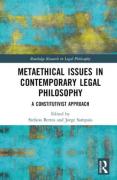
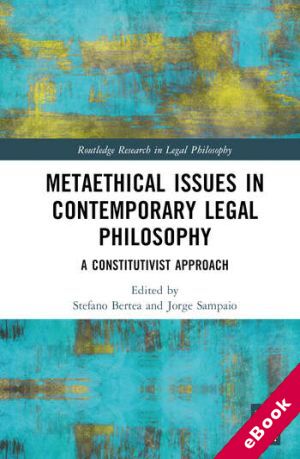
This volume explores the importance of constitutivism for legal studies. Constitutivism is the view that the normative force, or authority, of practical reasons is grounded in principles, capacities, aims, or functions that are essential to, and thus constitutive of, agency. While the implications that the constitutivist approach has on the fundamental meta-ethical disputes and central ethical debates have been extensively explored, the literature on the relations between constitutivism and law remains scarce, unsystematic and sporadic. This collection brings together world-renowned practical philosophers and legal theorists to fill a noticeable gap in the literature. The authors systematically and innovatively address key dimensions of the relationships between constitutivism and the theoretical study of law, as well as programmatically offering novel insights into the conceptual connections between constitutivist claims, fundamental legal concepts and practices, legal issues, and, ultimately, the law as a distinctive concept.
The book will be of interest to academics and researchers working in the areas of Legal Philosophy, Legal Theory, Jurisprudence, Moral Philosophy and Meta-ethics.