The eBooks we sell are sold as a single-user licence and are intended for the end user only.
The sale of some eBooks are restricted to certain countries. To alert you to such restrictions, please select the country of the billing address of your credit or debit card you wish to use for payment.
For further information see https://www.wildy.com/ebook-formats
Once the order is confirmed an e-mail will be sent to you to allow you to download the eBook. For UK purchases this will be automatic. For purchases outside the UK a member of staff will need to confirm the sale. (Staff are available to do this during normal business hours, Mon-Fri 8:30-17:00 UK time)
All eBooks are supplied firm sale and cannot be returned. If you believe there is a fault with your eBook then contact us on ebooks@wildy.com and we will help in resolving the issue. This does not affect your statutory rights.
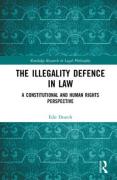
The Illegality defence posits that a cause of action cannot arise from a wrongful act. Barring a claim through the application of this defence contradicts considerations of corrective justice, as the defendant is released from liability even though the claimant would otherwise have been entitled to a remedy. This book re-examines the application of the Illegality Defence, framing it as a State deprivation of property for the public good, underscoring the necessity of constitutional protections in this context. Offering a novel approach, the work explores the development, interpretation, and application of the Illegality Defence within a constitutional framework, bridging the gap between private and public law. By delving into the structured concepts of proportionality, it aims to establish a more refined legal model which is sensitive to the protection of human rights—specifically, the human right to property. This approach seeks to enhance legal certainty and predictability in the application of the Illegality Defence.
The study will be essential reading for academics and researchers working in the areas of legal theory, human rights law, and jurisprudence.