Wildy Logo
(020) 7242 5778
enquiries@wildy.com

Planning Law:
A Practitioner's
Handbook 2nd ed


 William Webster, Robert Weatherley


Welcome to Wildys

Watch


Corporate Insolvency Practice:
Litigation, Procedure
and Precedents 3rd ed


 Mark Watson-Gandy


Offers for Newly Called Barristers & Students

Special Discounts for Newly Called & Students

Read More ...


Secondhand & Out of Print

Browse Secondhand Online

Read More...


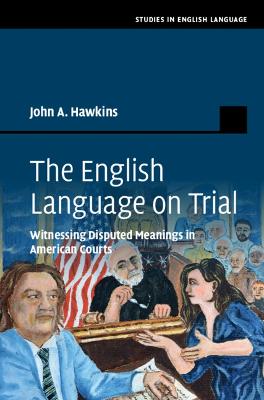
The English Language on Trial: Witnessing Disputed Meanings in American Courts


ISBN13: 9781009682787
Published: March 2026
Publisher: Cambridge University Press
Country of Publication: UK
Format: Hardback
Price: £105.00


This is a Print On Demand Title.

The publisher will print a copy to fulfill your order. Books can take between 1 to 3 weeks. Looseleaf titles between 1 to 2 weeks.

Many lawsuits arise over disagreements about language and about the meanings of everyday words, phrases, and sentences. This book draws on over fifty cases involving disputed meanings in the American legal system where the author served as an expert witness or consultant, to explore the interaction between language and law.

Stepping back from the legal specifics and their outcomes, it analyzes the disputes from the perspective of the language sciences, especially semantics and pragmatics, and language comprehension. It seeks to understand why, and in what areas of English grammar, lexis, and usage, they have arisen among speakers who do not normally miscommunicate and disagree like this.

The cases involve contracts, patents, advertising, trademarks, libel, and defamation, and descriptive insights and methods from the language sciences are applied to each case to make explicit the meanings that speakers would normally assign to English.

Subjects:
Other Jurisdictions , USA
Contents:
1. Introduction: creating meanings in everyday language use
2. Disputes over individual words
3. Disputes over word combinations
4. Disputes over whole clauses
5. Disputes over inferences
6. Disputes over reference and unique identification
7. Disputes over spelling and punctuation#
8. Conclusions