
Wildy Logo
(020) 7242 5778
enquiries@wildy.com

Book of the Month

Cover of Collective Litigation: A Practical Guide

Collective Litigation: A Practical Guide

Price: £250.00

Planning Law:
A Practitioner's
Handbook 2nd ed


 William Webster, Robert Weatherley


Welcome to Wildys

Watch


Corporate Insolvency Practice:
Litigation, Procedure
and Precedents 3rd ed


 Mark Watson-Gandy


Offers for Newly Called Barristers & Students

Special Discounts for Newly Called & Students

Read More ...


Secondhand & Out of Print

Browse Secondhand Online

Read More...


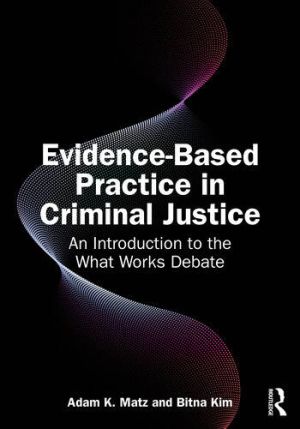
Evidence-Based Practice in Criminal Justice: An Introduction to the What Works Debate


ISBN13: 9781032749327
To be Published: December 2026
Publisher: Routledge
Country of Publication: UK
Format: Paperback
Price: £43.99


Evidence-Based Practice in Criminal Justice examines current practices and programming in criminal justice from a holistic perspective, covering policing, courts, corrections, and juvenile justice, with a focus on grounding justice with empirical research.

Many ingrained practices in criminal justice today have been based largely on conventional wisdom and experience, with limited empirical testing or validation. Over the past three decades, movements toward what works, best practices, and evidence-based practices have shifted the focus toward integrating empirical evidence in determining what and how work should be done in this field. What does “evidence-based practice” mean, though, and who has the authority to define it? How can agencies cope with gaps or conflicts in the empirical literature? This book demonstrates what constitutes evidence while discussing the limitations of what is known based on the current literature.

Aimed at undergraduates completing a senior capstone as well as early-stage graduate students, this book comprehensively reviews practices and programs across the various components of the criminal justice system, while also considering planning for new innovations or the reassessment and modification of existing ones.


Subjects:
Criminal Law, Criminology
Contents:
Part I: Why Studying Criminal Justice Matters and How it’s Currently Done
1. Accountability in Criminal Justice Practice; 2. Who Defines What Constitutes Sufficient Evidence: Understanding the Varying Definitions of “Evidence-Based”; 3. Who Conducts Research and Who Funds It; 4. Testing What Works: An Introduction to Program Evaluation and Experimental Design; 5. Translational Criminology: Effectively Communicating What Works through Systematic Reviews

Part II: What Research Currently Suggests Works
6. Policing: An Umbrella Review of Meta-Analyses; 7. Victim Services, Pretrial, Trial & Sentencing: An Umbrella Review of Meta-Analyses; 8. Corrections: An Umbrella Review of Meta-Analyses; 9. Juvenile Justice: An Umbrella Review of Meta-Analyses; 10. Implementation Science: Going Beyond What Works to How it Work and How to Keep it Working

Part III: Tips for Conducting an Independent Review of Empirical Literature
11. Empirical Articles and Journals: Why They Exist, Why Academics Publish, and Tips for Reading Them; 12. Taking Charge and Writing a Review

Conclusion







