
Wildy Logo
(020) 7242 5778
enquiries@wildy.com

Book of the Month

Cover of A Guide to the DIAC Arbitration Rules

A Guide to the DIAC Arbitration Rules

Price: £150.00

Planning Law:
A Practitioner's
Handbook 2nd ed


 William Webster, Robert Weatherley


Welcome to Wildys

Watch


Corporate Insolvency Practice:
Litigation, Procedure
and Precedents 3rd ed


 Mark Watson-Gandy


Offers for Newly Called Barristers & Students

Special Discounts for Newly Called & Students

Read More ...


Secondhand & Out of Print

Browse Secondhand Online

Read More...


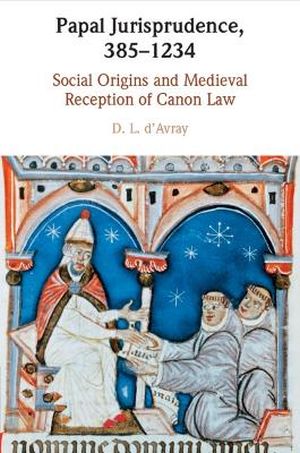
Papal Jurisprudence, 385-1234: Social Origins and Medieval Reception of Canon Law


ISBN13: 9781108460866
To be Published: May 2024
Publisher: Cambridge University Press
Country of Publication: UK
Format: Paperback (Hardback in 2022)
Price: £25.99


Why did bishops turn to the papacy for advice in late Antiquity? And what does the reception of these decretals reveal about the legal and religious culture of the mid-thirteenth century? This interpretative volume seeks to explain the first decretal age of late antiquity, placing the increased demand for papal jurisprudence - long before it exerted its influence through religious fear - within its social broad context. D. L. d'Avray then traces the reception of this jurisprudence through to the mid-thirteenth century, and the post-Gratian decretal age.

Along the way he explores the role of Charlemagne and 'Pseudo-Isidore', which included many genuine early decretals alongside forged ones. Similarities between the Latin world c. 400 and c. 1200 thus help explain parallels between the two decretal ages. This book also analyses decretals from both ages in chapters on pagan marriages, clerics in minor orders, and episcopal elections. For both ages the relation between canon law and other religious genres is elucidated, demonstrating many fascinating parallels and connections.


Subjects:
Ecclesiastical Law, Legal History
Contents:
Introduction
1. Transformations and long-term explanations
2. The Christian Roman empire, c.400
3. c.400: practical complexities and uncertainties
4. c.400: uncertainty about grace
5. Papal rulings and ritual
6. Hierarchies
7. Clerical status and monks
8. Returning heretics
9. Pelagianism and the papacy
10. Leo I
11. Post-imperial syntheses
12. Early papal laws in the barbarian west
13. Carolingian culture and its legacy
14.
1050-1150
15. Theology and law
16. c.400 and c.1200: complexity, conversion and bigamia
17. Clerics in minor orders
18. Choosing bishops
19. Overall conclusions

Appendix A. Leo I
Appendix B. Gelasius
Appendix C. Gloss II (Johannes Teutonicus and Bartholomaeus Brixiensis) on Gratian and the liber extra
Appendix D. Conceptual sources







