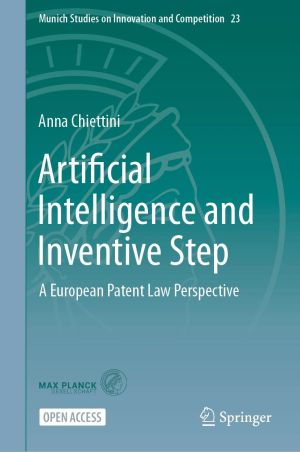
This open access book explores how artificial intelligence (AI) is reshaping the inventive process and challenging core principles of patent law. By enabling advances and innovations that might be unimaginable through human creativity and inventiveness alone, AI raises fundamental questions about how patent law should respond to a changing landscape of invention. Against this background, the book examines the patentability of inventions aided or generated by AI, focusing in particular on the rationale and mechanisms of the inventive step requirement under Article 56 of the European Patent Convention and in the practice of the European Patent Office. It considers whether the definition, skills, and knowledge of the person skilled in the art should evolve to reflect the routine use of AI as a research tool. It examines when AI may form part of the skilled person’s common general knowledge and how that determination should be made.
It also explores how AI’s ability to rapidly generate and analyse vast amounts of information poses challenges, particularly when assessing the state of the art and prior art for AI-related inventions. In addition, the book addresses the sufficiency of disclosure for AI-related inventions, asking whether existing standards adequately enable the skilled person to carry out such inventions. It evaluates competing proposals for adapting patent law, examination practices, and guidelines while preserving the integrity and fairness of the patent system. By identifying the distinctive challenges presented by AI innovation, the book contributes to the debate over whether the inventive step framework should be adjusted and whether new provisions tailored to AI-related inventions are needed.