The eBooks we sell are sold as a single-user licence and are intended for the end user only.
The sale of some eBooks are restricted to certain countries. To alert you to such restrictions, please select the country of the billing address of your credit or debit card you wish to use for payment.
For further information see https://www.wildy.com/ebook-formats
Once the order is confirmed an e-mail will be sent to you to allow you to download the eBook. For UK purchases this will be automatic. For purchases outside the UK a member of staff will need to confirm the sale. (Staff are available to do this during normal business hours, Mon-Fri 8:30-17:00 UK time)
All eBooks are supplied firm sale and cannot be returned. If you believe there is a fault with your eBook then contact us on ebooks@wildy.com and we will help in resolving the issue. This does not affect your statutory rights.
Despite expectations that the celebrated second wave of constitutional democracy in the 1990s would facilitate economic development, Africa remains the continent with the highest level of poverty in the world. The fight against poverty hinges on a vibrant economy that creates jobs and income by generating enough revenue to enable the state to take pro-development measures. However, instead of the economic benefits that were supposed to accrue from the constitutional reforms of the last three decades (including entrenching a market economy), African economies remain weak, a situation that has been aggravated by the COVID-19 pandemic.
By focusing on the relationship between constitutionalism and economic growth in Africa, this volume addresses five questions: (1) In the constitutional reforms of the 1990s and thereafter, did constitutions also reflect the shift towards a market economy, and if so, in what manner? (2) Given that agriculture and extractive industries are the main sources of state revenue in many African economies, how are matters of land and other natural resources dealt with constitutionally? (3) Where the market economy is captured in a constitution, what is the state's relationship to that economy: interventionist or laissez-faire, or somewhere in between? Have constitutions also established a 'social' state that provides its citizens with the basic elements of a dignified life? (4) In the process of constitution-making and implementation concerning the economy, what impact has globalization had on constitutionalism and economic growth in Africa? (5) Finally, how has the relationship between constitutionalism and economic growth played out in practice? Is there a symbiotic relationship? Has constitutionalism led (or may do so) to greater economic prosperity?
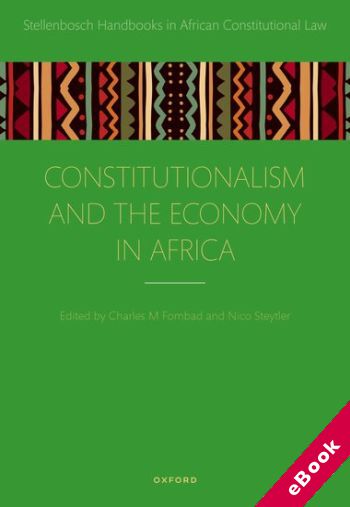
Constitutionalism and the Economy in Africa offers a range of comprehensive arguments and case studies that will be of interest and use to academics, post-graduate students, judges, lawyers, economists, and policy makers involved in the economic role of the State, the impact of globalization, and the constitutional foundations for land and natural resources exploitation.