The eBooks we sell are sold as a single-user licence and are intended for the end user only.
The sale of some eBooks are restricted to certain countries. To alert you to such restrictions, please select the country of the billing address of your credit or debit card you wish to use for payment.
For further information see https://www.wildy.com/ebook-formats
Once the order is confirmed an e-mail will be sent to you to allow you to download the eBook. For UK purchases this will be automatic. For purchases outside the UK a member of staff will need to confirm the sale. (Staff are available to do this during normal business hours, Mon-Fri 8:30-17:00 UK time)
All eBooks are supplied firm sale and cannot be returned. If you believe there is a fault with your eBook then contact us on ebooks@wildy.com and we will help in resolving the issue. This does not affect your statutory rights.
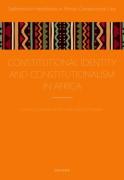
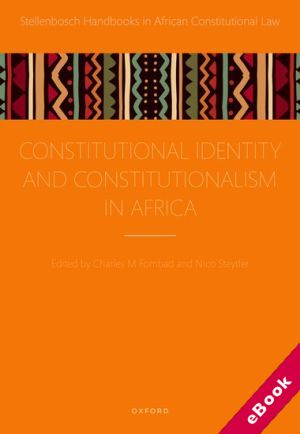
In its modern history, Africa has experienced different waves of constitutional ordering. The latest democratisation wave, which began in the 1990s, has set the stage over the past decade for what is now a hotly debated issue: do recent, new, or fundamentally revised constitutions truly reflect an African constitutional identity? Thoughtfully navigating a contested field, this volume brings to the fore a number of foundational questions about African constitutionalism.
Constitutional Identity and Constitutionalism in Africa asks whether the concept of constitutional identity clarifies our understanding of constitutional change in Africa, including an exploration of the relationship between constitutional identity and a country's unique culture(s) and histories. Building on this, contributions examine the persistent role of colonial heritages in shaping constitutional identity in post-Independence African nations, and the question of path-dependency. Given the enduring influence of the colonial experience, the volume asks how, why, and to what end African constitutions must be 'decolonised' to form an authentic constitutional identity. This theoretical insight is supplemented and further deepened by detailed case studies of South Africa, Ethiopia, Cape Verde, Cameroon, and Egypt and their diverse experience of constitutional continuity and change.
This volume in the Stellenbosch Handbooks in African Constitutional Law series, brings together contributions from established scholars and emerging voices on the study of constitutional processes. They provide an urgent critical analysis of existing paradigms, concepts and normative ideologies of modern African constitutionalism in the context of constitutional identity.