The eBooks we sell are sold as a single-user licence and are intended for the end user only.
The sale of some eBooks are restricted to certain countries. To alert you to such restrictions, please select the country of the billing address of your credit or debit card you wish to use for payment.
For further information see https://www.wildy.com/ebook-formats
Once the order is confirmed an e-mail will be sent to you to allow you to download the eBook. For UK purchases this will be automatic. For purchases outside the UK a member of staff will need to confirm the sale. (Staff are available to do this during normal business hours, Mon-Fri 8:30-17:00 UK time)
All eBooks are supplied firm sale and cannot be returned. If you believe there is a fault with your eBook then contact us on ebooks@wildy.com and we will help in resolving the issue. This does not affect your statutory rights.
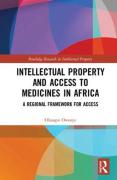
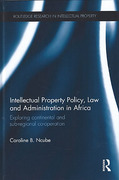
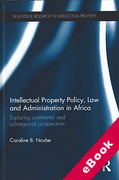
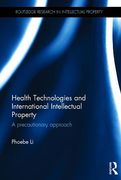
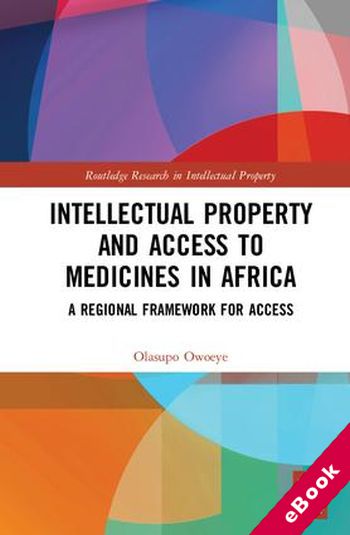
A major target of Goal 3 of the Sustainable Development Goals adopted by the United Nations in 2015 is the elimination of ‘the epidemics of AIDS, tuberculosis, malaria and neglected tropical diseases’ and combating ‘hepatitis, water-borne diseases and other communicable diseases’. Intellectual property (IP) has been identified as one of the factors impeding access to affordable medicines in developing countries, especially in relation to the HIV pandemic.
This book examines the scope of the existing flexibilities in international IP law for promoting access to medicines. It analyses the factors accounting for the underutilisation of the flexibilities in Africa and the measures that African countries may adopt to address the IP barriers to access to medicines. It explores the regional strategies that Africa can adopt to resolve the tension between IP regimes and access to medicines. It also highlights how trade liberalisation and regional integration can play crucial roles in enhancing the use of TRIPS flexibilities, local pharmaceutical manufacturing and access to medicines in Africa.
By adopting qualitative research methods to investigate how African countries may effectively use IP to serve public health purposes through the stratagem of regional integration, this book will be a valuable contribution to the existing literature on IP.