The eBooks we sell are sold as a single-user licence and are intended for the end user only.
The sale of some eBooks are restricted to certain countries. To alert you to such restrictions, please select the country of the billing address of your credit or debit card you wish to use for payment.
For further information see https://www.wildy.com/ebook-formats
Once the order is confirmed an e-mail will be sent to you to allow you to download the eBook. For UK purchases this will be automatic. For purchases outside the UK a member of staff will need to confirm the sale. (Staff are available to do this during normal business hours, Mon-Fri 8:30-17:00 UK time)
All eBooks are supplied firm sale and cannot be returned. If you believe there is a fault with your eBook then contact us on ebooks@wildy.com and we will help in resolving the issue. This does not affect your statutory rights.
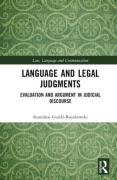
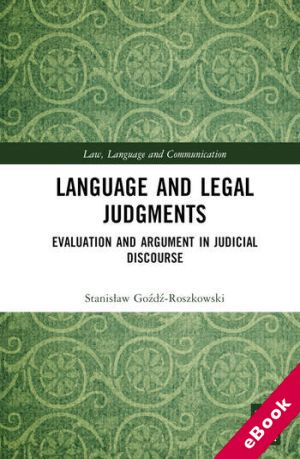
Integrating research methods from Linguistics with contemporary Legal Argumentation Theory, this book highlights the complexities of legal justification by focusing on the role of value-laden language in argument construction and use. The combination of linguistic analysis and the pragma-dialectic approach to legal argumentation yields a new way of perceiving and understanding the phenomenon of evaluation, one that offers theoretical and practical gains. Analyzing a vast corpus of judicial opinions from the United States Supreme Court and Poland’s Constitutional Court, the book paints a clear picture of complex linguistic choices made by judges to assess and support arguments in the justifications of their decisions. The book will be of interest to scholars in Law, Linguistics and Rhetoric, as well as to judges and practicing lawyers engaged in the art of argumentation.