The eBooks we sell are sold as a single-user licence and are intended for the end user only.
The sale of some eBooks are restricted to certain countries. To alert you to such restrictions, please select the country of the billing address of your credit or debit card you wish to use for payment.
For further information see https://www.wildy.com/ebook-formats
Once the order is confirmed an e-mail will be sent to you to allow you to download the eBook. For UK purchases this will be automatic. For purchases outside the UK a member of staff will need to confirm the sale. (Staff are available to do this during normal business hours, Mon-Fri 8:30-17:00 UK time)
All eBooks are supplied firm sale and cannot be returned. If you believe there is a fault with your eBook then contact us on ebooks@wildy.com and we will help in resolving the issue. This does not affect your statutory rights.
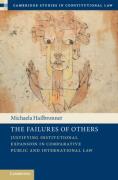
Arguments from failure – arguments that an institution must expand its powers because another institution is failing in some way 'to do its job' - are commonplace. From structural reform litigation where courts sometimes assume administrative or legislative functions, to the Uniting for Peace Resolution of the UN General Assembly, to the recent bill quashing British subpostmasters' convictions, such arguments are offered in justification for unorthodox exercises of public power. But in spite of their popularity, we lack a good understanding of these arguments in legal terms. This is partly because failure itself is a highly malleable concept and partly because arguments from failure blur into other more familiar legal doctrines about implied powers or emergencies. Michaela Hailbronner argues that we can do better: we should recognize arguments from failure as a distinct concept of public law and harness the tools of contemporary constitutional theory to evaluate such arguments in different settings.