Our email services are slowly returning to normal and we will reply as and when they are received although some may still be delayed. If your enquiry is urgent you can still call the shop on (020) 7242 5778 (08.30-17:00).
Last updated 13/11/26 15:30 GMT

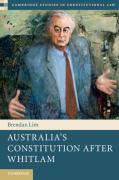
Australia's constitutional crisis of 1975 was not simply about the precise powers of the Senate or the Governor-General. It was about competing accounts of how to legitimate informal constitutional change.
For Prime Minister Gough Whitlam, and the parliamentary tradition that he invoked, national elections sufficiently legitimated even the most constitutionally transformative of his goals. For his opponents, and a more complex tradition of popular sovereignty, more decisive evidence was required of the consent of the people themselves.
This book traces the emergence of this fundamental constitutional debate and chronicles its subsequent iterations in sometimes surprising institutional configurations: the politics of judicial appointment in the Murphy Affair; the evolution of judicial review in the Mason Court; and the difficulties Australian republicanism faced in the Howard Referendum.
Though the patterns of institutional engagement have changed, the persistent question of how to legitimate informal constitutional change continues to shape Australia's constitution after Whitlam.