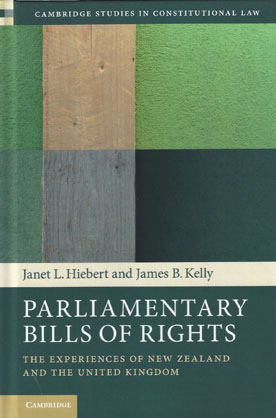
Both New Zealand and the United Kingdom challenge assumptions about how a bill of rights functions. Their parliamentary bills of rights constrain judicial review and also look to parliament to play a rights-protecting role.
This arises from the requirement to inform parliament if legislative bills are not compatible with rights. But are these bills of rights operating in this proactive manner? Are governments encountering significantly stronger pressures to ensure legislation complies with rights? Are these bills of rights resulting in more reasoned deliberations in parliament about the justification of legislation from a rights perspective?
Through extensive interviews with public officials and analysis of parliamentary debates where questions of compliance with rights arise (prisoner voting, parole and sentencing policy, counter-terrorism legislation, and same-sex marriage), this book argues that a serious gap exists between the promise of these bills of rights and the institutional variables that influence how these parliaments function.