
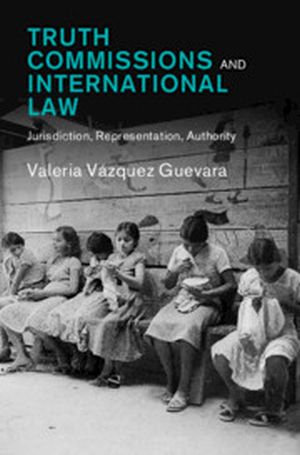
This book examines how truth commissions construct authoritative accounts of conflict, and how they account for the plurality of accounts across affected communities. Vázquez Guevara examines three of the earliest and most influential truth commissions: Argentina (1983–1984), Chile (1990–1991), and El Salvador (1992–1993), and examines how relevant cultural objects support or counter the official account for each. In doing so, she argues that these truth commissions drew on international law to authorise their accounts of violent conflict, and that this had the consequence of privileging an internationally-authorised truth over other truths, whilst simultaneously strengthening the authority of international law over the post-conflict state. By demonstrating how truth commissions turn to international law for authority, the book shows how this produces an official account of past violence and promises of future community, which fundamentally affects how communities live together in the aftermath of violent conflict.










