The eBooks we sell are sold as a single-user licence and are intended for the end user only.
The sale of some eBooks are restricted to certain countries. To alert you to such restrictions, please select the country of the billing address of your credit or debit card you wish to use for payment.
For further information see https://www.wildy.com/ebook-formats
Once the order is confirmed an e-mail will be sent to you to allow you to download the eBook. For UK purchases this will be automatic. For purchases outside the UK a member of staff will need to confirm the sale. (Staff are available to do this during normal business hours, Mon-Fri 8:30-17:00 UK time)
All eBooks are supplied firm sale and cannot be returned. If you believe there is a fault with your eBook then contact us on ebooks@wildy.com and we will help in resolving the issue. This does not affect your statutory rights.
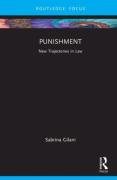
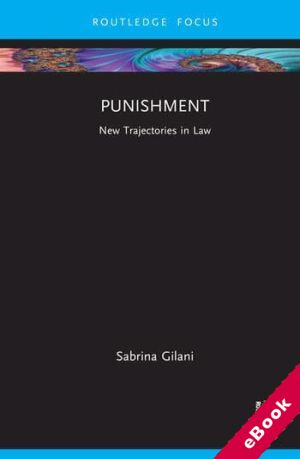
This book expands the growing field of punishment ecology and advances an environmental theory of punishment that centralises Nature as a political force capable of exercising penal power.
In dialogue with post-humanist and new materialist thought, Punishment unsettles Western philosophy’s casting of nature as a passive, inert backdrop to human action. Instead, it foregrounds a Nature that resists, recalibrates in response to, and co-produces social practice. Asking what role this creative, responsive, more-than-human Nature plays in both the practice and lived experience of criminal punishment. Centring chemical and fungal agency, this book disrupts conventional legal narratives surrounding prisoner illness and the lethal injection, revealing how contemporary forms of penal power are entangled with the political economies of colonialism, racial capitalism, industrial agriculture, and resource extractivism. In bringing these entanglements into sharper focus, this book develops an ethics of punishment that moves beyond the individual and institutional frames of traditional sociolegal approaches to show how penal power is not only environmentally distributed but proliferates through material systems in ways that blur the spatial and temporal boundaries through which we typically organise the world and imagine our place within it.
This book will be a key text for criminologists, sociologists, jurists, and others interested in criminal law and penal theory.