
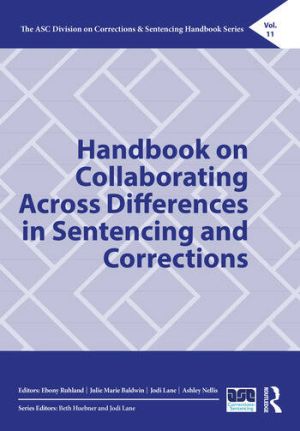
This volume offers a collection of chapters exploring a range of research collaborations within the field of sentencing and corrections, focusing on both process and results. Chapters cover partnerships between people and organizations with different trainings, backgrounds, and/or purposes, such as academics in different fields, practitioners, policymakers, and those with and without lived experience in the justice system, with mental health issues, and/or with substance use disorders. The range of sentencing and corrections agencies includes courts, diversion programs or alternatives to incarceration, community supervision departments, and correctional institutions.
Contributions provide valuable insights into the development of such partnerships, highlighting effective strategies, identifying key factors that contribute to successful collaborations, and addressing challenges alongside practical solutions. The sections are organized to focus on critical aspects of collaboration, including the processes of working together in the field, advancing partnerships, achieving desired outcomes, and bridging the gap between academic research and its application by policymakers, practitioners, and the broader public.
The volume shines a light on the importance and impact of collaborating across differences in sentencing and corrections and advances best practices for achieving successful partnerships. This is Volume 11 of The ASC Division on Corrections and Sentencing Handbook Series. The handbooks provide in-depth coverage of seminal and topical issues around sentencing and corrections for scholars, students, practitioners, and policymakers.










