The eBooks we sell are sold as a single-user licence and are intended for the end user only.
The sale of some eBooks are restricted to certain countries. To alert you to such restrictions, please select the country of the billing address of your credit or debit card you wish to use for payment.
For further information see https://www.wildy.com/ebook-formats
Once the order is confirmed an e-mail will be sent to you to allow you to download the eBook. For UK purchases this will be automatic. For purchases outside the UK a member of staff will need to confirm the sale. (Staff are available to do this during normal business hours, Mon-Fri 8:30-17:00 UK time)
All eBooks are supplied firm sale and cannot be returned. If you believe there is a fault with your eBook then contact us on ebooks@wildy.com and we will help in resolving the issue. This does not affect your statutory rights.
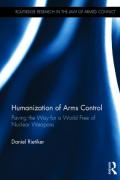
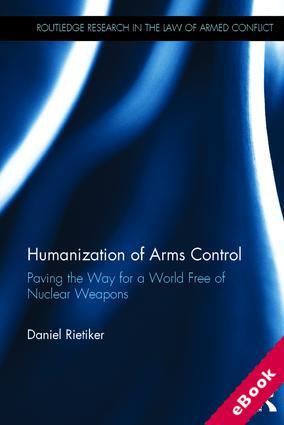
This book sets out a human-centred approach to arms control stressing the contribution of arms control in respect to both humanitarian law and human rights law. The book examines the successes of recent arms control treaties on non-nuclear weapons, aiming at eliminating entire categories of weapons, namely chemical weapons, anti-personnel mines and cluster munitions. It also considers the Arms Trade Treaty (ATT) whose adoption is a particularly good example of an international instrument combining arms control concerns with the protection of the human being.
The book then goes on to look at the use of nuclear weapons and its incompatibility with international humanitarian law before exploring whether the human-centred approach, which places the individuals at the centre of the debate, can also be applied to instruments restricting or prohibiting nuclear weapons. The book explores the preparatory work on arms control treaties and in particular the role of civil society. One of the questions it analyses is whether civil society will be able to replicate the success strategies that have been used in in the field of anti-personnel mines (Ottawa Convention) and cluster munitions (Oslo Convention) in the nuclear weapons field. Will it be possible to agree on a treaty banning the use of nuclear weapons or even banning these weapons in absolute terms? The book concludes by putting forward concrete proposals for additional legal measures which could lead to nuclear disarmament.