The eBooks we sell are sold as a single-user licence and are intended for the end user only.
The sale of some eBooks are restricted to certain countries. To alert you to such restrictions, please select the country of the billing address of your credit or debit card you wish to use for payment.
For further information see https://www.wildy.com/ebook-formats
Once the order is confirmed an e-mail will be sent to you to allow you to download the eBook. For UK purchases this will be automatic. For purchases outside the UK a member of staff will need to confirm the sale. (Staff are available to do this during normal business hours, Mon-Fri 8:30-17:00 UK time)
All eBooks are supplied firm sale and cannot be returned. If you believe there is a fault with your eBook then contact us on ebooks@wildy.com and we will help in resolving the issue. This does not affect your statutory rights.
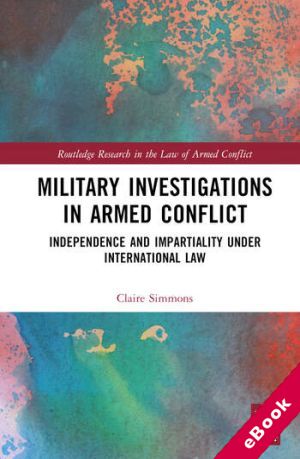
An allegation is made that a war crime was committed by a soldier during a conflict. Who should investigate the allegation? How should they investigate? This book explores a topic of critical importance in legal and policy discussions surrounding the accountability of military operations in armed conflict, and problematises some presumptions that are often made about the topic.
The work provides the international legal framework necessary to address these questions and establishes the precise standards of independence and impartiality as applicable to investigations in armed conflict. It questions the assumption that the standards of independence and impartiality of investigations should be measured in the same way that we measure these standards for judges, courts, and tribunals. It also explores the ways in which military institutions and culture, as well as the context of armed conflict, may impact the effectiveness of investigations or the perception of justice by those affected. By demonstrating the precise ways in which military investigations can contribute to, or hinder, the effectiveness of investigations, the book clarifies States’ responsibilities with regards to their accountability efforts for serious violations of international law in armed conflict.
The work will be a valuable resource for academics, researchers and policy-makers working in the areas of international humanitarian law, international human rights law as well as political science and military ethics.