The eBooks we sell are sold as a single-user licence and are intended for the end user only.
The sale of some eBooks are restricted to certain countries. To alert you to such restrictions, please select the country of the billing address of your credit or debit card you wish to use for payment.
For further information see https://www.wildy.com/ebook-formats
Once the order is confirmed an e-mail will be sent to you to allow you to download the eBook. For UK purchases this will be automatic. For purchases outside the UK a member of staff will need to confirm the sale. (Staff are available to do this during normal business hours, Mon-Fri 8:30-17:00 UK time)
All eBooks are supplied firm sale and cannot be returned. If you believe there is a fault with your eBook then contact us on ebooks@wildy.com and we will help in resolving the issue. This does not affect your statutory rights.
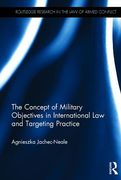
The concept that certain objects and persons may be legitimately attacked during armed conflicts has been well recognised and developed through the history of warfare. This book explores the relationship between international law and doctrine in determining whether an object is a lawful military target. By examining the interpretations and applications of the 1977 Additional Protocol I to the four 1949 Geneva Conventions, this book provides a comprehensive analysis of the concept and use of military objective.
Tackling topical issues such as the targeting of television and radio stations, computer network/cyber targets, Agnieszka Jachec-Neale analyses the concept of military objective within the context of both modern military doctrine and the major coalition operations which have been undertaken since it was formally defined.
This monograph will be of great interest to students and scholars of international law and the law of armed conflict, as well as security studies and international relations.