The eBooks we sell are sold as a single-user licence and are intended for the end user only.
The sale of some eBooks are restricted to certain countries. To alert you to such restrictions, please select the country of the billing address of your credit or debit card you wish to use for payment.
For further information see https://www.wildy.com/ebook-formats
Once the order is confirmed an e-mail will be sent to you to allow you to download the eBook. For UK purchases this will be automatic. For purchases outside the UK a member of staff will need to confirm the sale. (Staff are available to do this during normal business hours, Mon-Fri 8:30-17:00 UK time)
All eBooks are supplied firm sale and cannot be returned. If you believe there is a fault with your eBook then contact us on ebooks@wildy.com and we will help in resolving the issue. This does not affect your statutory rights.
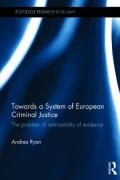
With the developing landscape of a European criminal justice sphere comes an increasing imperative for scholars and practitioners to gain some insight into the diversity that exists in the criminal justice systems of European Union Member States. This book explores the mutual admissibility of evidence; a facet of EU criminal justice that is proving difficult to realise. While the Lisbon Treaty places the issue of mutual admissibility of evidence squarely on the agenda, the EU instruments to date have not succeeded in achieving this goal.
Andrea Ryan argues that part of the reason for this failure is that while the mutual recognition instruments have focussed on the issue of gathering evidence and safeguarding suspects' rights, they have not addressed how evidence is to be presented and contested at trial. Drawing upon case studies from Ireland, France and Italy, and adopting a legal cultural perspective, and enriched by the author's observations of criminal trials, the book presents a detailed analysis of the developments to date in EU criminal justice and evidence law. By examining evidence practices the book asks whether the inquisitorial and accusatorial traditions within the EU systems are too irreconcilable to achieve a system of mutual admissibility of evidence. The book will be of great interest and use to academics and practitioners with an interest in European and comparative criminal justice, criminal procedure, human rights and socio-legal studies.