The eBooks we sell are sold as a single-user licence and are intended for the end user only.
The sale of some eBooks are restricted to certain countries. To alert you to such restrictions, please select the country of the billing address of your credit or debit card you wish to use for payment.
For further information see https://www.wildy.com/ebook-formats
Once the order is confirmed an e-mail will be sent to you to allow you to download the eBook. For UK purchases this will be automatic. For purchases outside the UK a member of staff will need to confirm the sale. (Staff are available to do this during normal business hours, Mon-Fri 8:30-17:00 UK time)
All eBooks are supplied firm sale and cannot be returned. If you believe there is a fault with your eBook then contact us on ebooks@wildy.com and we will help in resolving the issue. This does not affect your statutory rights.
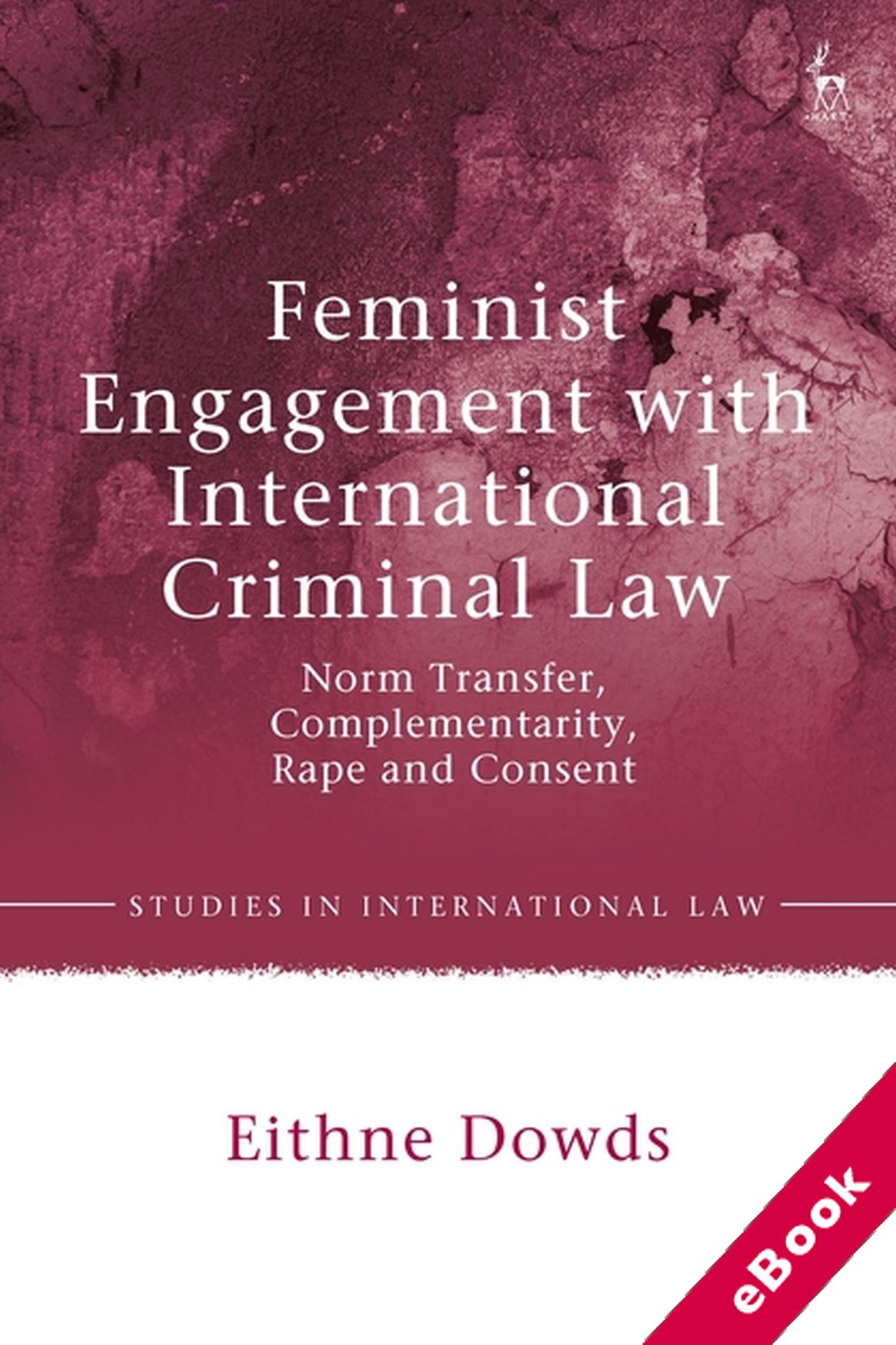
The work introduces the feminist strategy of 'norm transfer' to international criminal law; that is that notion that international standards trickle down to the national level and fill in any gaps in domestic legislation.
Situating this strategy within the complementarity regime of the International Criminal Court (ICC), norm transfer may occur in two stages: the first stage involves transposing international norms into domestic law on international crimes through 'implementing legislation'. The second involves filtering these norms into domestic law or practice on domestic crimes.
The work has at its centre the case study of the crime of rape. It draws attention to calls by non-governmental organisations and scholars for the domestic adoption of the ICC definition of rape for the purposes of rape as a domestic crime. By applying the lens of norm transfer to this debate, the book illustrates gaps in this definition and argues that the ICCs position on consent is not as clear cut as first thought.
The book argues that the definition is in need of revision. It goes further, setting out draft legislative amendments to the 'Elements of Crimes' for the ICC and its 'Rules of Procedure and Evidence'. Finally it turns its attention to the domestic landscape, suggesting amendments to the United Kingdom (UK) Sexual Offences Act 2003 and to the Youth Justice and Criminal Evidence Act 1999: thereby showing how the revised version of the ICC definition can be used in the United Kingdom context.