The eBooks we sell are sold as a single-user licence and are intended for the end user only.
The sale of some eBooks are restricted to certain countries. To alert you to such restrictions, please select the country of the billing address of your credit or debit card you wish to use for payment.
For further information see https://www.wildy.com/ebook-formats
Once the order is confirmed an e-mail will be sent to you to allow you to download the eBook. For UK purchases this will be automatic. For purchases outside the UK a member of staff will need to confirm the sale. (Staff are available to do this during normal business hours, Mon-Fri 8:30-17:00 UK time)
All eBooks are supplied firm sale and cannot be returned. If you believe there is a fault with your eBook then contact us on ebooks@wildy.com and we will help in resolving the issue. This does not affect your statutory rights.
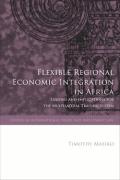
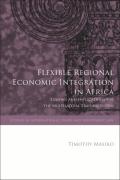
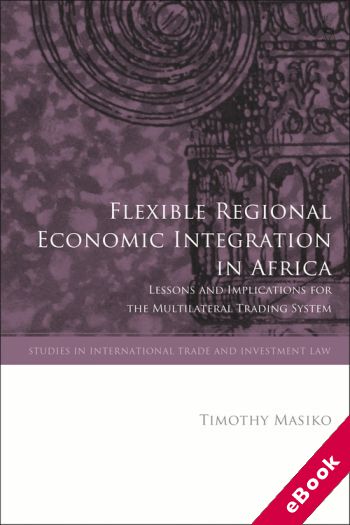
This book examines the relationship between flexible regional economic integration in the East African Community (EAC), through its application of variable geometry, and the establishment of the African Continental Free Trade Area (AfCFTA) as a continent-wide form of integration. It uses a historical, political, legal and economic analysis of the processes that led to the adoption of flexible regional integration in Africa, with particular regard to the EAC. This takes place in the inescapable context of pan-Africanism, showing how regional integration efforts in Africa are based on pan-Africanist ideals, and how an evolution of these ideals has led to an evolution in the goals of integration. With growing awareness of the weaknesses and impracticality of consensus-based decision-making on a global level, it makes the case for the pursuit of flexibility in multilateral trade, drawing lessons from the experience of the AfCFTA and blocs in other regions.
This book is a historical evaluation of regional economic integration efforts in Africa and it follows the path of attempts to integrate the economies on the continent from colonial times to the birth of the AfCFTA. While it is a study in law, it relies heavily on politics, economics and history to weave together a more complete theory of economic integration based on the African experience.
Flexible Regional Economic Integration in Africa was awarded the 2020 SIEL–Hart Prize in International Economic Law.