The eBooks we sell are sold as a single-user licence and are intended for the end user only.
The sale of some eBooks are restricted to certain countries. To alert you to such restrictions, please select the country of the billing address of your credit or debit card you wish to use for payment.
For further information see https://www.wildy.com/ebook-formats
Once the order is confirmed an e-mail will be sent to you to allow you to download the eBook. For UK purchases this will be automatic. For purchases outside the UK a member of staff will need to confirm the sale. (Staff are available to do this during normal business hours, Mon-Fri 8:30-17:00 UK time)
All eBooks are supplied firm sale and cannot be returned. If you believe there is a fault with your eBook then contact us on ebooks@wildy.com and we will help in resolving the issue. This does not affect your statutory rights.
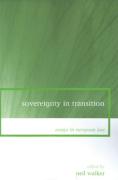
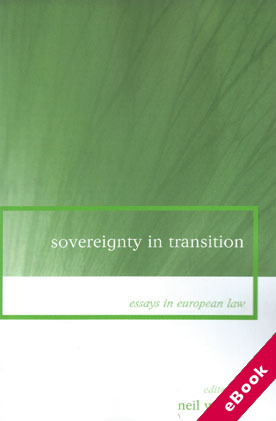
Sovereignty in Transition brings together a group of leading scholars from law and cognate disciplines to assess contemporary developments in the framework of ideas and the variety of institutional forms associated with the concept of sovereignty. Sovereignty has been described as the main organising concept of the international society of states - one which is traditionally central to the discipline and practice of both constitutional law and of international law.
The volume asks to what extent, and with what implications, this centrality is challenged by contemporary developments that shift authority away from the state to new sub-state, supra-state and non-state forms. A particular focus of attention is the European Union, and the relationship between the sovereignty traditions of various member states on the one hand and the new claims to authority made on behalf of the European Union itself on the other are examined.
The collection also includes contributions from international law, legal philosophy, legal history, political theory, political science, international relations and theology that seek to examine the state of the sovereignty debate in these disciplines in ways that throw light on the focal constitutional debate in the European Union.