The eBooks we sell are sold as a single-user licence and are intended for the end user only.
The sale of some eBooks are restricted to certain countries. To alert you to such restrictions, please select the country of the billing address of your credit or debit card you wish to use for payment.
For further information see https://www.wildy.com/ebook-formats
Once the order is confirmed an e-mail will be sent to you to allow you to download the eBook. For UK purchases this will be automatic. For purchases outside the UK a member of staff will need to confirm the sale. (Staff are available to do this during normal business hours, Mon-Fri 8:30-17:00 UK time)
All eBooks are supplied firm sale and cannot be returned. If you believe there is a fault with your eBook then contact us on ebooks@wildy.com and we will help in resolving the issue. This does not affect your statutory rights.
Due to a technical issue some ebooks are not available to order.
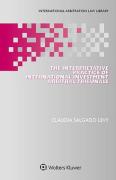
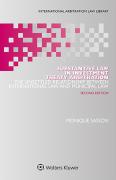
The Interpretative Practice of International Investment Arbitral Tribunals is a far-reaching work that explores how investment arbitral tribunals accomplish their task of interpreting the different rules of law within the international investment framework, and how they address the interpretative problems they face. Legal interpretation is crucial to striking the right balance between what a norm is – or should be – and its meaning as applied in a concrete case. Given the complex hybrid nature of investor-State arbitration, the act of interpretation acquires particular significance.
In its expansive coverage of the interpretative practice of international investment arbitral tribunals, the following has been provided by the author:
An extensive review of relevant arbitral awards, jurisprudence, and case studies illustrates how tribunals navigate legal sources. The author also examines possible reasons for tribunals’ interpretative flexibility and indicates the limitations to their interpretative exercise.
With its insights into how tribunals’ interpretative choices influence the consistency, legitimacy, and predictability of the investment arbitration system, this book will serve as an aid to legal practitioners and scholars to comprehend the complexities and challenges faced by investment arbitral tribunals, thus enabling an anticipation of the scope and limits of arbitral interpretative reasoning. It offers a major contribution to the ongoing debate on the development of a cohesive and predictable international investment law framework by revealing how interpretation shapes legal outcomes.



Due to a technical issue some ebooks are not available to order.

Due to a technical issue some ebooks are not available to order.

Due to a technical issue some ebooks are not available to order.


Due to a technical issue some ebooks are not available to order.

Due to a technical issue some ebooks are not available to order.


Due to a technical issue some ebooks are not available to order.


Due to a technical issue some ebooks are not available to order.


Due to a technical issue some ebooks are not available to order.

Due to a technical issue some ebooks are not available to order.

Due to a technical issue some ebooks are not available to order.

Due to a technical issue some ebooks are not available to order.


Due to a technical issue some ebooks are not available to order.

Due to a technical issue some ebooks are not available to order.


Due to a technical issue some ebooks are not available to order.


Due to a technical issue some ebooks are not available to order.


Due to a technical issue some ebooks are not available to order.



Due to a technical issue some ebooks are not available to order.


Due to a technical issue some ebooks are not available to order.


Due to a technical issue some ebooks are not available to order.

Due to a technical issue some ebooks are not available to order.



Due to a technical issue some ebooks are not available to order.


Due to a technical issue some ebooks are not available to order.

Due to a technical issue some ebooks are not available to order.