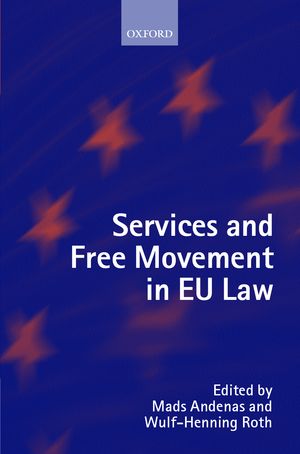
This book provides a critical analysis of the present state of EU services law. It also provides a contribution to the development of the right to provide services, which is increasingly important.
The legal and regulatory foundations of the European services economy are in the process of being reformed. Many issues are unresolved. Some can only be resolved by the European Court or by Community legislation. But a more fundamental analysis of several of these issues is still lacking. One issue is the reconciliation of the case law on goods and services. The conventional view was that the freedoms should follow different routes: the free movement of goods went further than the right to provide services. Have we now got a universal law of free movement making these distinctions redundant? Or has services law gone further than goods law?
Another unresolved issue is the division between the regulatory powers of home and host countries in the principle of home country control: does it work? The broad exceptions, relying on concepts such as the general good, do not leave a high degree of certainty. The book makes use of the financial services sector to analyse the practical implementation of home country control and its exceptions.
Mads Andenas and Wulf-Henning Roth have assembled a group of EU scholars from many different jurisdictions and with different views on these matters of such fundamental and practical importance for EU law.