Wildy Logo
(020) 7242 5778
enquiries@wildy.com

Book of the Month

Cover of 4 Stone Buildings on Liquidators

4 Stone Buildings on Liquidators

Edited by: Andrew de Mestre KC
Price: £289.00

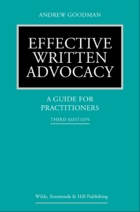
Effective Written Advocacy:
A Guide for
Practitioners 3rd


 Andrew Goodman


Welcome to Wildys

Watch


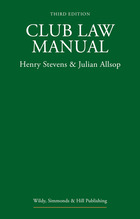
Club Law Manual
3rd ed


 Henry Stevens
Julian Allsop


Offers for Newly Called Barristers & Students

Special Discounts for Newly Called & Students

Read More ...


Rules, Norms and Decisions: On the Conditions of Practical and Legal Reasoning in International Relations and Domestic Affairs


ISBN13: 9780521409711
ISBN: 0521409713
Published: February 1993
Publisher: Cambridge University Press
Country of Publication: UK
Format: Paperback
Price: £34.00


This is a Print On Demand Title.

The publisher will print a copy to fulfill your order. Books can take between 1 to 3 weeks. Looseleaf titles between 1 to 2 weeks.

This book assesses the impact of norms on decision-making. It argues that norms influence choices not by being causes for actions, but by providing reasons. Consequently it approaches the problem via an investigation of the reasoning process in which norms play a decisive role. Kratochwil argues that, depending upon the strictness the guidance norms provide in arriving at a decision, different styles of reasoning with norms can be distinguished. While the focus in this book is largely analytical, the argument is developed through the interpretation of the classic thinkers in international law (Grotius, Vattel, Pufendorf, Rousseau, Hume, Habermas).

Contents:
Acknowledgements; Introduction; 1. Rules, norms, and actions: laying the conceptual foundations; 2. Anarchy and the state of nature: the issue of regimes in international relations; 3. The emergence of types and forms; 4. The force of prescriptions: Hume, Hobbes, Durkheim and Freud on compliance with norms; 5. The discourse on grievances: Pufendorf and the 'laws of nature' as constitutive principles for the discursive settlement of disputes; 6. The notion of 'right'; 7. The question of 'law'; 8. The path of legal arguments; Conclusion; Notes; Index.