
The eBooks we sell are sold as a single-user licence and are intended for the end user only.
The sale of some eBooks are restricted to certain countries. To alert you to such restrictions, please select the country of the billing address of your credit or debit card you wish to use for payment.
For further information see https://www.wildy.com/ebook-formats
Once the order is confirmed an e-mail will be sent to you to allow you to download the eBook. For UK purchases this will be automatic. For purchases outside the UK a member of staff will need to confirm the sale. (Staff are available to do this during normal business hours, Mon-Fri 8:30-17:00 UK time)
All eBooks are supplied firm sale and cannot be returned. If you believe there is a fault with your eBook then contact us on ebooks@wildy.com and we will help in resolving the issue. This does not affect your statutory rights.
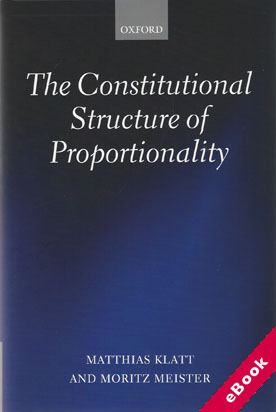
As constitutional law globalizes, the quest for a common grammar or 'generic constitutional law' becomes more pressing. Proportionality is one of the most prominent and controversial components of the modern, global constitutional discourse.
In view of the alarming tension between the triumphant success of proportionality and the severity of the criticism directed towards it, this book offers an in-depth analysis of the critics of proportionality and demonstrates that their objections against the proportionality test are not convincing. It clarifies and further develops the current theories of proportionality and balancing.
Building upon on Robert Alexy's predominant principles theory, the book suggests several modifications to this theory. Drawing examples from the case law of the European Court of Human Rights, the European Court of Justice, and various national constitutional courts it illustrates the argument in favour of proportionality and demonstrates its relevance for deciding concrete cases.










