
The eBooks we sell are sold as a single-user licence and are intended for the end user only.
The sale of some eBooks are restricted to certain countries. To alert you to such restrictions, please select the country of the billing address of your credit or debit card you wish to use for payment.
For further information see https://www.wildy.com/ebook-formats
Once the order is confirmed an e-mail will be sent to you to allow you to download the eBook. For UK purchases this will be automatic. For purchases outside the UK a member of staff will need to confirm the sale. (Staff are available to do this during normal business hours, Mon-Fri 8:30-17:00 UK time)
All eBooks are supplied firm sale and cannot be returned. If you believe there is a fault with your eBook then contact us on ebooks@wildy.com and we will help in resolving the issue. This does not affect your statutory rights.
Due to a technical issue some ebooks are not available to order.
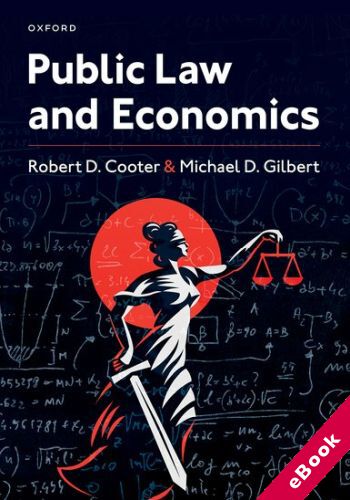
This comprehensive textbook applies economic analysis to public law. The economic analysis of law has revolutionized legal scholarship and teaching in the last half-century, but it has focused mostly on private law, business law, and criminal law. This book extends the analysis to fundamental topics in public law, such as the separation of government powers, regulation by agencies, constitutional rights, and elections. Every public law involves six fundamental processes of government: bargaining, voting, entrenching, delegating, adjudicating, and enforcing. The book devotes two chapters to each process, beginning with the economic theory and then applying the theory to a wide range of puzzles and problems in law. Each chapter concentrates on cases and legal doctrine, showing the relevance of economics to the work of lawyers and judges. Featuring lucid, accessible writing and engaging examples, the book addresses enduring topics in public law as well as modern controversies, including gerrymandering, voter identification laws, and qualified immunity for police.










