The eBooks we sell are sold as a single-user licence and are intended for the end user only.
The sale of some eBooks are restricted to certain countries. To alert you to such restrictions, please select the country of the billing address of your credit or debit card you wish to use for payment.
For further information see https://www.wildy.com/ebook-formats
Once the order is confirmed an e-mail will be sent to you to allow you to download the eBook. For UK purchases this will be automatic. For purchases outside the UK a member of staff will need to confirm the sale. (Staff are available to do this during normal business hours, Mon-Fri 8:30-17:00 UK time)
All eBooks are supplied firm sale and cannot be returned. If you believe there is a fault with your eBook then contact us on ebooks@wildy.com and we will help in resolving the issue. This does not affect your statutory rights.
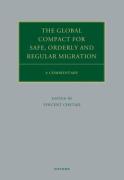
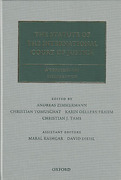
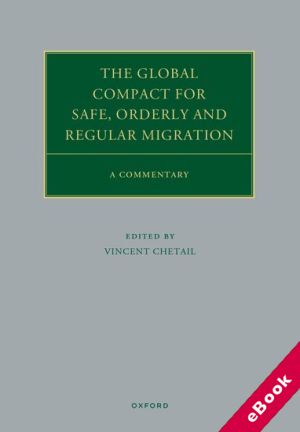
The Global Compact for Safe, Orderly and Regular Migration (GCM) is the first intergovernmental agreement adopted by the United Nations to address all dimensions of international migration. This authoritative legal commentary provides a comprehensive and insightful analysis of the Compact's normative foundations, legal content, and policy relevance, serving scholars, practitioners, and policymakers concerned with international law and migration governance.
Beginning with a critical examination of its preamble, vision, and guiding principles, the book explores the normative aspirations that underpin the GCM, highlighting its grounding in state sovereignty, responsibility-sharing, non-discrimination, and human rights. It then provides detailed commentary on each of the Compact's twenty-three objectives, assessing their legal content, policy orientation, and alignment with existing international legal frameworks. The commentary also situates each objective within the broader contexts of human rights and migration governance, while evaluating its potential to influence both national legislation and international practice. Crucially, the book also addresses the mechanisms and challenges of implementation, unveiling how states, international organizations, local authorities, and non-state actors—including civil society and the private sector—interpret and operationalize the Compact's provisions.
Bridging legal scholarship, critical perspectives, and real-world practice, this commentary offers an in-depth analysis of the role and relevance of international law and intergovernmental cooperation on one of the most polarized issues of our times. It also contributes a forward-looking assessment of the Compact's role in shaping the future of global migration governance.
Research for the book was supported by the nccr - on the move, funded by the Swiss National Science Foundation grant 51NF40-205605.