The eBooks we sell are sold as a single-user licence and are intended for the end user only.
The sale of some eBooks are restricted to certain countries. To alert you to such restrictions, please select the country of the billing address of your credit or debit card you wish to use for payment.
For further information see https://www.wildy.com/ebook-formats
Once the order is confirmed an e-mail will be sent to you to allow you to download the eBook. For UK purchases this will be automatic. For purchases outside the UK a member of staff will need to confirm the sale. (Staff are available to do this during normal business hours, Mon-Fri 8:30-17:00 UK time)
All eBooks are supplied firm sale and cannot be returned. If you believe there is a fault with your eBook then contact us on ebooks@wildy.com and we will help in resolving the issue. This does not affect your statutory rights.
The rules of treaty interpretation, codified in the Vienna Convention on the Law of Treaties, now govern the understanding of virtually all treaties, both in international law and within many national legal systems. As treaties increasingly influence a wide array of legal and policy areas, the ability to interpret them correctly has become essential for lawyers, diplomats, administrators, and other officials.
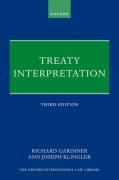
This thoroughly updated third edition of Treaty Interpretation offers a clear and comprehensive guide to the modern rules of treaty interpretation and their practical application. It incorporates analysis of recent case law from international and national courts, developments in the work of the International Law Commission, and insights from the expanding academic literature on treaty interpretation.
The book explains how the codified rules differ from domestic interpretive approaches and illustrates their use through real-world examples. With over four decades of jurisprudence now available, this edition draws on a rich body of case law to illuminate both the theory and practice of treaty interpretation.
Whether dealing with international agreements or domestic legislation with international dimensions, legal professionals today are increasingly likely to encounter treaty provisions. This book equips them with the tools to interpret such provisions accurately and effectively.