The eBooks we sell are sold as a single-user licence and are intended for the end user only.
The sale of some eBooks are restricted to certain countries. To alert you to such restrictions, please select the country of the billing address of your credit or debit card you wish to use for payment.
For further information see https://www.wildy.com/ebook-formats
Once the order is confirmed an e-mail will be sent to you to allow you to download the eBook. For UK purchases this will be automatic. For purchases outside the UK a member of staff will need to confirm the sale. (Staff are available to do this during normal business hours, Mon-Fri 8:30-17:00 UK time)
All eBooks are supplied firm sale and cannot be returned. If you believe there is a fault with your eBook then contact us on ebooks@wildy.com and we will help in resolving the issue. This does not affect your statutory rights.
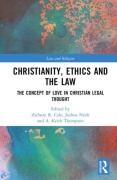
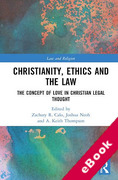
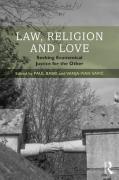
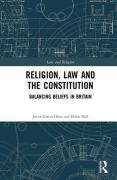
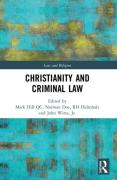
The growing interest in the relationship between religion and law is, in the case of Christianity, often viewed in monolithic terms. Moreover, the debate is often seen in terms of the relationship of Christianity to the State along with discussions about, for example, religious freedom. Christianity is often seen as responding to claims made on it by the state and by the growth of secularism. This book takes a different approach. First, it makes the claim that Christianity has something of value to say about various pressing issues which are of direct relevance to contemporary society. Amongst these are the place of human rights and that of individual claims of conscience. Second, it does not regard Christianity as a monolithic whole but takes as its starting point the sundering of Christendom at the Reformation which, it claims, led in many cases to divergent patterns of thought between Catholics and Protestants about law and its place in society. However, as this book shows, in many cases Catholic and Protestant thinking on areas such as natural law is not as divergent as it is often thought. 500 years after the Reformation, the work presents a reflection on the roots of Catholic and Protestant thinking on law and its place in society. It will be of interest to canon lawyers as well as academics and students of law and religion.